

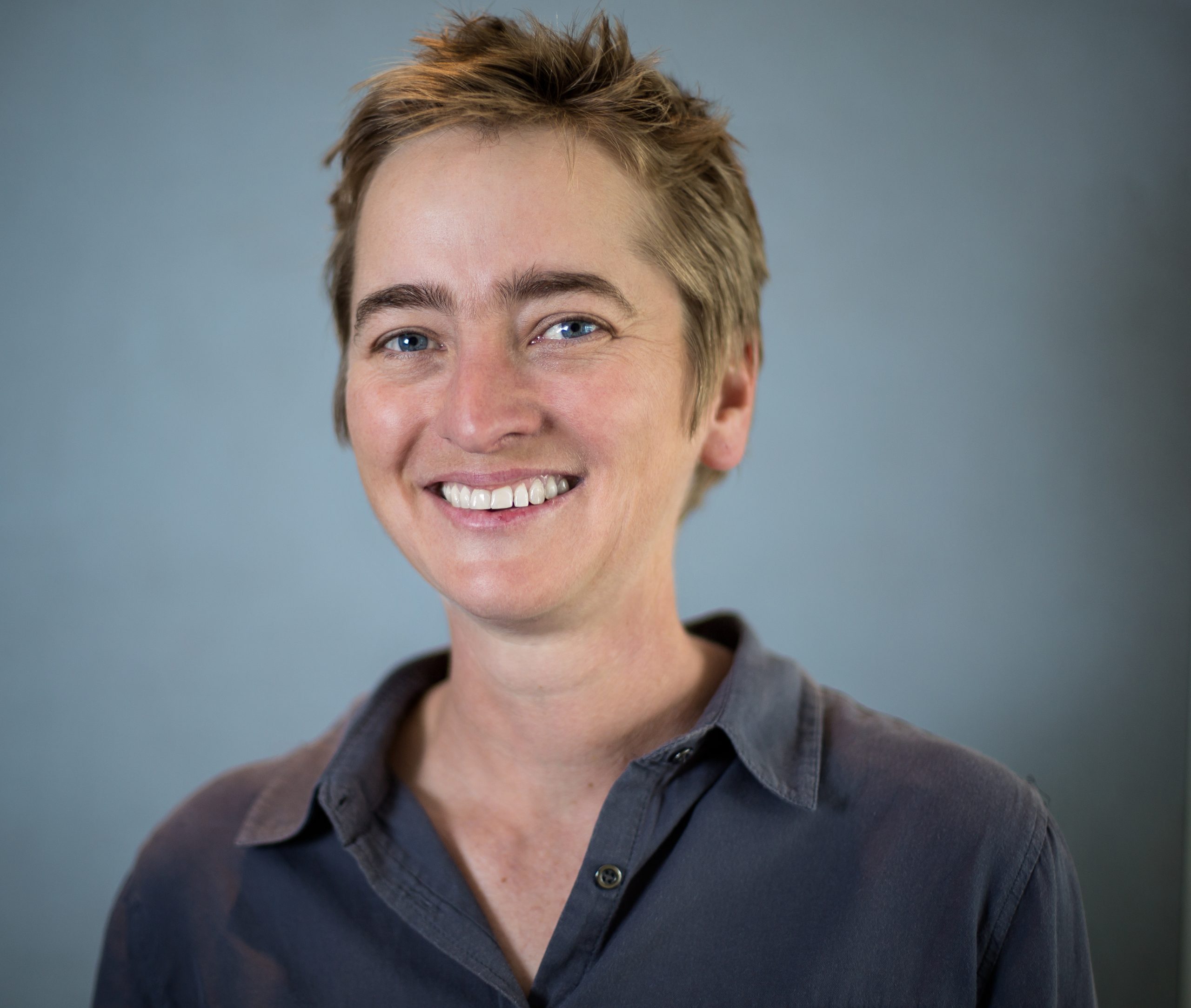
 Professor Penny Moore is a virologist and the South African Research Chair of Virus-Host Dynamics at the University of the Witwatersrand (Wits) and the National Institute for Communicable Diseases (NICD). She is Director of the Antibody Immunity Research Unit (AIRU), an extramural unit of the South African Medical Research Council and holds a joint appointment as Honorary Senior Scientist at the Centre for the AIDS Programme of Research in South Africa (CAPRISA) at the University of KwaZulu-Natal. Penny is a member of the US National Academy of Sciences and was appointed a Fellow of the Royal Society of South Africa in 2026.
Penny completed her BSc (Hons) and MSc in Microbiology at Wits before moving to the University of London, where she completed her PhD in Virology studying Hepatitis B virus in 2003. On returning to South Africa, she joined the NICD and has worked there ever since, building a research programme in viral immunology. She leads a team of over 40 scientists, postdoctoral researchers, and graduate students whose work integrates virology, immunology, structural biology, and bioinformatics across multiple pathogens.
Her group has contributed to the characterisation of HIV-antibody co-evolution and the development of broadly neutralising antibodies, work that now shapes how researchers design HIV vaccines.
When SARS-CoV-2 arrived, her team was among the first to identify the immune-evasive nature of emerging variants – including Omicron, which she described at the time as research being conducted at “warp speed.” Her research has since expanded to include influenza, respiratory syncytial virus (RSV), and Tuberculosis (TB).
Penny was Immunopaedia’s very first Immunologist of the Month! We interviewed her in November 2016, when her focus was broadly neutralising antibodies in HIV. A decade later, we’re catching up with her to find out how her research may have shifted.
When we last interviewed you in November 2016, you described this as a “hugely exciting time” for HIV vaccine research. A decade on, are you still as excited, and what has changed?
I was super excited a decade ago, and I’m even more excited now, because we’ve moved into a new era where we’re taking two decades’ worth of basic research, and putting it into clinical trials in people. This will give us a much better understanding of what works, what doesn’t work, and what the hurdles are.
The big HIV trials over the last few years have changed our understanding of HIV vaccine design. For my team, the big change is that we are more focused on clinical trials. All the discovery science that we’ve done over the past 20 years feeds into the clinical trials, and the results from the clinical trials go back into the discovery science. As a lab, we’re contributing to all of those different parts, which is cool.
That multidisciplinary way of working is really exciting for its diversity, but it also means that different people can become experts in different niches, and so it’s a way of growing people as well as doing good science.
“I was super excited a decade ago, and I’m even more excited now…”
Broadly neutralising antibodies have been the centrepiece of your career. Can you explain, in simple terms, why they are so difficult to make the body produce and why getting that right is the key to an HIV vaccine?
We now have evidence from animal studies and human studies that show that broadly neutralising antibodies can stop a virus from infecting a person. But only if the antibody is broad enough and potent enough. So, you need a lot of antibody!
In people who are living with HIV, only a very small group of people make broadly neutralising antibodies, and they do that only after years of infection and high viral loads. This happens because of huge pressure that’s been put on the immune system to force those antibodies to become broadly neutralising, through a long process of affinity maturation. Trying to copy that; to trigger that long, tortuous maturation pathway by vaccination in people who are HIV-naive is really daunting.
The other thing is that broadly neutralising antibodies come from really rare precursor B cells. So, it’s like finding hen’s teeth. You’ve got to design a clever vaccine that specifically seeks out and activates those rare precursors, and then force those antibodies to pick up maturation that normally occurs over 3 or 4 years of infection. Then do all of that by administering a series of different vaccines, which is much less pressure on the immune system than years of infection. It’s a hard thing to do.
What does it mean for you, personally, to watch an antibody your team isolated move from the lab into clinical trials? CAP256 was an early neutraliser you identified in one of your studies.
This is a monoclonal antibody from CAP256, isolated years ago, and it’s now gone into HIV naive adults, and infants who are born to moms living with HIV. We have gone from basic discovery science, where we were just trying to understand how she managed to make these antibodies, to having a product that can go into people.
It’s been amazing to see the process, but it’s also made me realise how difficult it is, and how long it takes to get from those basic discoveries to having a product. It’s been a 20-year process. And it’s needed a huge number of collaborators. It’s made me very aware of how many different skills are needed to get from a discovery to a product. It seems to me that everything that can go wrong does go wrong, so the team has to be dogged and determined. And it also made me realise that we don’t do nearly enough of it in South Africa.
“I’m addicted to this work. The fact that I can do science and build people. It’s the perfect career.”
How have you dealt with the challenges that you’ve faced over the last 20 years?
For me, it’s pure curiosity and the fact that I am part of a large and wonderful team. I’m addicted to this work. The fact that I can do science and build people. It’s the perfect career. It’s the two things I love most merged into one job, so it’s easy to stay committed!
Back in November 2021, when Omicron emerged, what was it like inside the lab, and what did that pace of work teach you?
The lab was like an autoclave. It was a huge amount of stress. We went from being a relatively small group to doubling in size overnight just to keep up with the volume of work. We were working in shifts, making sure that things kept moving as fast as possible. All the years of HIV research meant that we were technically well-placed to answer some of the questions around COVID-19, but the pace was extraordinary.
The pace of communication of results was a huge challenge too. Getting the balance right between rapid sharing of data and maintaining data quality was something we were constantly juggling. But my team was totally remarkable, and incredibly productive. Maybe the thing we learned is that sometimes we’re too slow to communicate science. Sometimes (like in a pandemic!) it’s more important to share the results earlier, rather than have absolutely exquisite figures for your paper. And then your data, even if it doesn’t look immaculate, informs the next set of experiments
“It’s hard to convey the fact that science is like that, that it changes as you discover things, without compromising people’s faith in science. That was an interesting balancing act.“
Your team was among the first to identify the immune-evasive nature of Omicron. How did you manage the responsibility of communicating uncertainty to the public under that kind of pressure?
For me, having to do press conferences and explain in relatively lay terms what was happening in an environment where, day-to-day, our own understanding of what was happening was changing was really difficult. It’s hard to convey the fact that science is like that, that it changes as you discover things, without compromising people’s faith in science. That was an interesting balancing act.
I didn’t enjoy press conferences, but it made me realise how important it is for scientists to get better at conveying our science to a more lay audience, and I enjoy trying to do that, even though I don’t think I get it right most of the time.
Do you think scientists are still sharing data as openly? There was a lot of discussion around that during the COVID-19 pandemic, and it’s been a discussion in science for quite some time.
I think the pandemic changed the way we share science forever. We’re still putting stuff out on preprints. I think many, many people still are. Sharing earlier so that other people can see the data and react to it. I think that was one of the positives from the pandemic.
During that time, we were amazed at how generous people were with their data and with reagents. I’d phone up somebody in the US and say, “We can’t get hold of this”, and they’d move mountains to get us stuff. For my team, a lot of that sense of community was there before the pandemic, and new collaborations formed during the pandemic have lasted!
So, I’m very lucky with my collaborators and friends, and there’s a community in science that I really enjoy being part of.
You pivoted quickly from HIV to SARS-CoV-2. How easy was that transition, and what did it teach you about HIV?
So, technically they’re close. We use exactly the same platforms – bioinformatics, serology, making complex proteins, and neutralisation assays. All of those are platforms that we set up for HIV, and that was easy to transfer, but the virus is very different. In fact, it made me realise how tough HIV is, because in comparison, SARS-CoV-2 was really easy to understand and easy to track.
Your research now includes influenza, RSV and TB. Is there a common thread in how your team approaches new pathogens?
We realised, as a lab, that we liked the pivot – we liked the fact that we could use our platform for other bugs. So that’s changed our lab completely since the pandemic.
We were an HIV lab, and now we’re a lab that does HIV, and a little bit of COVID, some RSV, some influenza, and some tuberculosis. Now we’re doing a lot more research in diverse pathogens that we think are of public health relevance, and where we think an African perspective is useful.
Using our platforms for multiple different pathogens is also excellent for capacity development, because that means all those different pathogens turn into niches for students, postdocs, and senior scientists to make their own. It is another nice feedback loop.
“We can’t rely on science happening in the rest of the world. We have to do the science here. Especially now with less money to do that…”
South Africa has produced extraordinary HIV science on the global stage, yet the country’s own people still bear a disproportionate share of the epidemic, and now much of the funding is disappearing. How do you sit with that tension?
It’s something that really matters to me, because Africa is the centre of the pandemic . I study virus-antibody dynamics, and both the virus and the antibody part are profoundly understudied across Africa. A lot of that was supported by funding that has disappeared.
It’s why we have to keep doing that kind of science. We can’t rely on science happening in the rest of the world. We have to do the science here. Especially now with less money to do that, it is tough, but we must find a way do it here, because you can’t extrapolate from other parts of the world.
When funding is constrained, there’s a tendency to go where the funding is, and that decides our research priorities. This risks creating a much narrower pathway for discovery science. People, skills, platforms and sites take a long time to rebuild, so we must keep as much in place as we can.
You supervise and have supervised many graduate students. What does good mentorship look like when you have a lot of students and a high workload?
Busy and chaotic. But for us, for the whole team, the mentorship is an integral part of the science, and the two are very much connected. The mentees are doing a lot of the science, so it’s nice to push the boundaries of the science while growing people.
It requires a lot of energy, but the lab’s depth means there are a lot of people teaching. People who have been mentored over the years are now mentoring within the unit. There’s a lot of depth, and that means that students are exposed to different science and different people and different kinds of mentorship styles, and I think that’s a good model.
Capacity building in Africa is often framed as a struggle. What are your thoughts on this?
I think that students who learn to do science in this environment are forced to be creative and resilient, so it makes for creative, tough scientists. Maybe that offsets some of the disadvantages of not always having all the shiny toys or being able to get all the reagents in time.
I’m really optimistic about capacity development in Africa. I’m involved at lots of levels in lots of different organisations that do capacity development. Some of the organisations across Africa that are doing mentorship are doing it in such a deliberate, creative, careful way, because the resources are so constrained. That way you generate really amazing people.
Interview by Bonamy (Bon) Holtak