

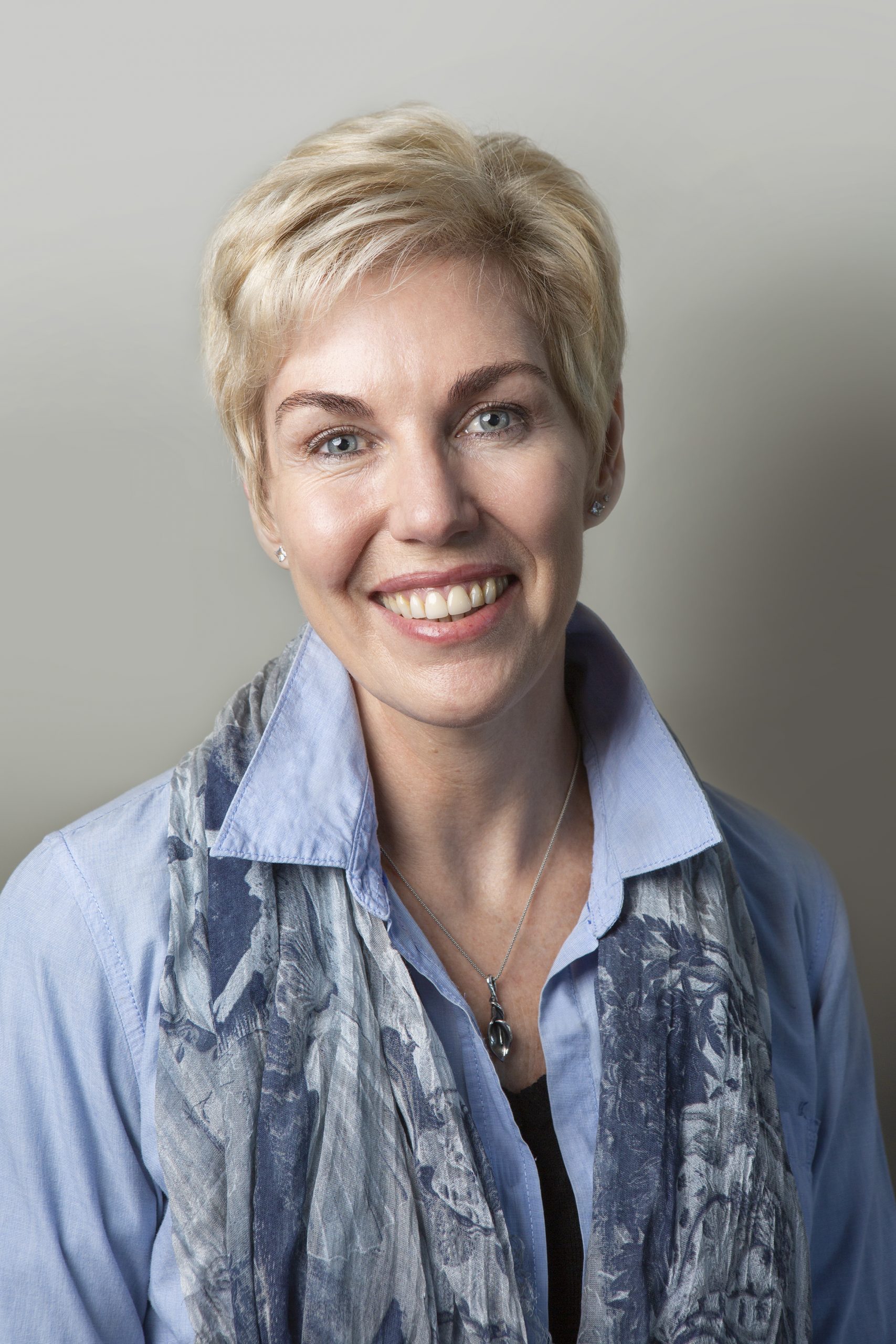
 Professor Theresa Rossouw is a clinician-scientist in the Department of Immunology at the University of Pretoria (UP), South Africa and Director of the Institute for Innovative Immunology Research and Education (IINSPIRE), home to one of only three FOCIS (Federation of Clinical Immunology Societies) Centres of Excellence in Africa.
Professor Rossouw holds a rare combination of qualifications: an MBChB, master’s degrees in Biomedical Ethics and in Epidemiology and Biostatistics, and two PhDs – one in Philosophy and one in Medical Immunology. After heading the HIV clinic at Pretoria Academic Hospital and serving as Tshwane district’s HIV consultant, she moved into research in 2016 to lead UP’s Immunopathology Laboratory. Her work centres on HIV-associated drug resistance, systemic immune activation, and immune recovery, with growing interests in AI applications in HIV care and cancer immunology.
Theresa is an NRF-rated scientist and SAMRC Silver Medallist (2023). She is the immediate past President of the South African Immunology Society (SAIS), Treasurer of the Federation of African Immunology Societies (FAIS), and a member of the WHO’s HIVResNet working group.
Prof Rossouw is a researcher who bridges clinical medicine, immunology, public health and philosophy, making her a compelling voice in science and leadership in Africa.
Your career path has been unusual; how did each step lead to the next, and do you think there is something that connects them all?
I was in GP practice, and I really didn’t like it. I also didn’t know what I wanted to do. A psychiatry professor I respected had just completed a master’s in philosophy and suggested I try it, saying that it had completely changed his perspective.
I became extremely interested in the work of Michel Foucault, who was a French philosopher. He spoke a lot about power – the different kinds of power in society, in relationships, in hierarchies. And that really resonated with me. Coincidentally, he had HIV. And when I was offered the job to run the HIV clinic, I thought, oh my goodness, it brings all these things that I’ve been thinking about together – how power excludes people, and how that exposes them to risk. It was really like serendipity.
At that time, people were still scared to treat people with HIV – they thought they were to blame. And I just saw it completely differently. Which enabled me, I think, to stay in the field for a long time, because I had that grounding.
Philosophy has been my grounding in where I’m going with my career as well. I have been inspired by Foucault, feminist philosophy and African philosophy and its emphasis on the communal over the individual. I think we’ve forgotten that you are supposed to look out for the people around you. I am because we are. We like to say it, but we’re not really living it.
Tell us about IINSPIRE. How are you approaching the challenge of making immunology genuinely embedded in medical training?
A colleague, Prof André van Niekerk, a paediatric pulmonologist, walked into my office one day and told me that when he saw medical students in fifth year, they couldn’t tell him what a T cell or a B cell was.
I was shocked. We thought we were doing a pretty good job – even though we only had about ten lectures. But immunology was being taught too early, too briefly, and mostly by non-clinicians who made it abstract.
The approach through IINSPIRE is patient-centred throughout. We do case-based teaching now. It’s all patient-based – how you’re going to make the diagnosis, how does that lead to treatment? And what we’ve negotiated is that all the disciplines integrate immunology. If they go to cardiology, there will be at least one or two lectures about the immunology of the heart. The same for the respiratory system, the same for neurology. So that it becomes more real.
Doctors are just treating the symptoms. They don’t always know how to think about the causes. And those causes are purely immunological. You can’t blame them, because they were never taught how to do it. IINSPIRE aims to change that.
IINSPIRE also runs outreach sessions for ENTs, paediatricians and other clinicians. We teach them about things that have developed since they qualified and make it practical. For example, if you see a patient like this, these are the tests that you should do.
As Director of IINSPIRE, one of only three FOCIS Centres of Excellence in Africa, you’ve described success not in terms of academic output but patient access. What would that look like in practice over the next five years?
If a patient in the public sector can get access to proper diagnostics and proper treatment that is specific for their disease – that is success.
At the moment, it takes about eight years for somebody with an autoimmune disease to be diagnosed. And then they get a hit-and-miss treatment. We need to start thinking of how we can personalise the diagnostics and the treatment without it costing a fortune.
Diagnostics is part of the research. How can we make those tests accessible in the public sector? And the second part is: how can we make immunological therapy more accessible to patients in the public sector? Immunotherapy is becoming so advanced and showing such good results, but only a fraction of our patients can afford it, and almost nobody in the state sector can, unless you’re on a clinical trial.
We need to invest in people and incorporate things like telemedicine, where we can help with the diagnosis of somebody in the periphery or rural towns, so that they don’t have to come to an academic hospital. If we treat somebody in the most remote village that doesn’t have access even to a GP – that would be success.
Ethics is at the core of the IINSPIRE centre. I have a wonderful team of ethicists who will be working on and thinking about these questions – it’s not an afterthought; it’s actually built into the way we design the centre. It’s embedded. Before we rush to implement, we need to carefully consider how we do it to make sure there is equity. If treatments are not available to the people who need it most, it doesn’t make sense for me to implement a strategy.
Your work is increasingly intersecting with AI. Where do you see AI adding the most value in African healthcare, and what concerns you most about how it is currently developing?
AI fits in very nicely in immunotherapy and therapeutics because with the big data, the multi-omics, we will get better at predicting who’s going to respond to what kind of medication. And there’s no reason why that should only be in high-resource settings. It should be available in Africa as well.
I think AI has incredible functionality in the health system. There is so much we can do better with AI because it’s fast, has massive computing power, and can make connections we can’t. So, I think we need to harness it.
However, what concerns me is that it’s really monopolised, at the moment, by the big companies, and it’s driven by profit. It’s not driven for public good. And that is concerning.
AI is not made because people are trying to help us. It’s made because there is money to be made from it. And people shouldn’t be naive about what the agenda is behind it. In Africa, our health literacy is especially low, and so is our technological literacy. And I think the risk of exploitation is huge.
Having chaired research ethics committees at both UP and the Human Sciences Research Council, where do you see the ethical tensions in African immunology research today?
One of the biggest issues at the Ethics Committee is about genetic research. With immunology, genetics is, of course, incredibly important, because your immune system is genetically inherited. And how do we do genetic testing on people – especially if we start thinking about whole genome sequencing or whole exome sequencing. That data is critical. We need that data to populate or inform AI of what the African genetic profile looks like. But how do we protect those people from the risks of exploitation of genetic material?
We don’t know what it’s going to mean if you put somebody’s genetic information on a public database. You can’t de-identify it. You think you can, but in the era of AI, you absolutely can’t.
So there’s this incredible tension between not being overprotective – so that we prevent all kinds of innovation – but also protecting our population enough that they’re not exploited. And that is an incredibly difficult balance, and it keeps on shifting, I would say almost daily, with the new technologies that come up.
Something else to think about is whether individual consent is even the right framework for genetic data. The thing about genetics is that it doesn’t only belong to you. It also belongs to your family, and communities, and what you share actually has a direct impact on those people. So the idea of individual consent is actually not appropriate for genetic information. It should be more familial consent, community consent.
We are still exploring solutions, but one is to create a proxy of that person, like a digital twin, that is not exactly the same, that you can’t trace back to that person, but it still does what it needs to do in terms of the genetics. It’s above my pay grade, but we’ll have to look at innovative technology to solve it.
As the past President of SAIS and Treasurer of FAIS, what is the biggest gap you see in immunology capacity across the continent?
I think one of the biggest problems in immunology in Africa at the moment is really funding. And I think people should take this seriously, because we have the talent – we have people who are incredibly clever, both clinically and in the laboratory. And we can train them up, but we can’t give them a home in academia or in industry. They have to go overseas to fulfil their dreams.
So, we really need to invest in people here; to make posts available and to give them the infrastructure they need so they can compete on an international scale. If we can do that, I think it would be an incredible win for the continent.
What is research excellence to you? How do you navigate the tension between global research agendas and what African communities need?
Co-creation is so important – and that’s why many policies and innovations fail. If people don’t trust it, if they don’t buy into it, you can have the best technology or therapy in the world, but people won’t take it. You need to look at what the needs of the people are, what kind of response would be acceptable to them.
If you really want to make a difference, you need to do it the other way around. You can sit in your office and think out a wonderful hypothesis and test it. But the communities need to be part of it from the start.
For me, excellence must be that you can look back and say, I really made a difference to the lives of the people. That’s why we become researchers, that’s why we become clinicians; because we want to help. Not because we want to win a Nobel Prize. Those should be consequences of what you do. It shouldn’t be the goal. And I think we’ve forgotten that.
If you put a philosopher and an immunologist in the same room for a debate, which role would you take?
I would definitely choose the philosopher.
My science friends always say, oh, it’s so easy in philosophy; you don’t have to give an answer. Which I guess is true in a way. But you have to ask the right question. And that is the challenge of philosophy, and of ethics as well. It is not about having all the answers, but about asking the right question at the right time to make people think and change. So I would definitely be the philosopher.
If you could give one piece of advice to a young African scientist at the start of their career, what would it be?
The biggest thing I’ve learned is that you start out with a dream you want to accomplish, but at some point you might have to let go of it. At some point it doesn’t serve you any longer – maybe because you’re not growing enough, or it’s just not working out the way that you imagined. And it can be incredibly difficult to let go, because you’ve invested in it and you’ve become comfortable in it. But to get into a space where you are scared, a space that is new – that is an important step that you need to take.
I want young people to understand that the journey is not just easy. Life is not like that. Nothing that’s really worthwhile is easy. It takes from you. But it is extremely rewarding.
Interview by Bonamy (Bon) Holtak