

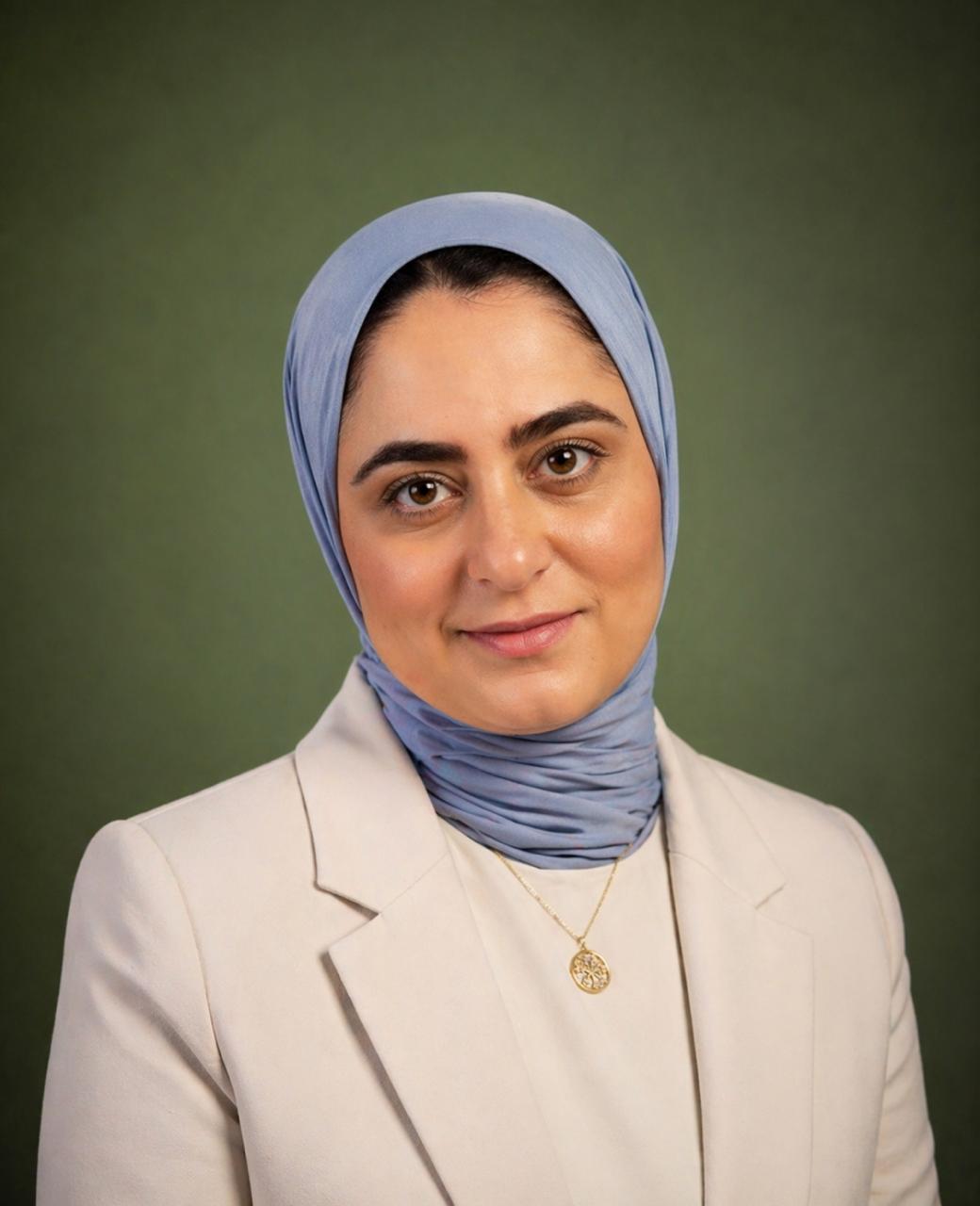
 Prof Ghita Zaz is a Professor of Electrical Engineering at the National School of Arts and Crafts (ENSAM), Hassan II University of Casablanca, where she leads work within the DELTA Laboratory (Digital Engineering for Leading Technologies and Automation) and coordinates the programme ‘Digital Engineering for the Health Sectors’. She holds a doctorate in Electronics from the Institut d’Électronique et des Systèmes, Université de Montpellier, France, and an engineering degree in networks and telecommunications from the École Nationale des Sciences Appliquées de Fès, Morocco.
Prof Zaz’s research applies sensor design, machine learning and explainable AI to real-world problems spanning industrial systems and health diagnostics, from anomaly detection in critical infrastructure to acoustic classification of respiratory disease.
Prof Zaz has been involved in the BRAINS project (MoBility for Research and African Integration through Health Sciences), co-supervising Salma Sobhi, a master’s student developing an AI chatbot for Immunopaedia. As well as supervising a new cancer initiative website with Immunopaedia Senior Communications Officer Bonamy (Bon) Holtak and a master’s student at the University of Hassan II of Casablanca, Hamza Kharmouch.
What does a typical day at DELTA Lab look like?
There isn’t really a “typical” day because my time is shared between teaching and research. As a professor at ENSAM Casablanca, I spend part of my week teaching, supervising students, and coordinating academic programmes. My presence at DELTA Lab is therefore not daily. It depends on the research activities we are conducting. Some days are dedicated to project meetings with colleagues, discussions with PhD and master’s students, scientific events or workshops, while others focus on research, proposal writing, supervising experiments, or collaborating with our national and international partners. The lab is a highly collaborative environment where teaching, research, and innovation naturally complement one another.
You coordinate the ‘Digital Engineering for the Health Sectors’ programme. Can you tell us about it?
The Digital Engineering for the Health Sectors (IDMS) master’s programme is a unique interdisciplinary programme built on a tripartite collaboration between the National School of Arts and Crafts (ENSAM Casablanca), the Faculty of Medicine and Pharmacy of Casablanca, and the Faculty of Dental Medicine, all part of Hassan II University of Casablanca.
The programme was created to bridge engineering and healthcare by training engineers who can develop innovative digital solutions for the medical sector. Students receive a multidisciplinary education combining artificial intelligence, IoT, embedded systems, biomedical instrumentation, medical imaging, health information systems, and data science.
What has it been like building a research career in AI in Morocco? What challenges have you faced?
Building a research career in AI in Morocco has been both exciting and challenging. AI is developing rapidly, and there is growing interest from universities, industry, and healthcare institutions. One of the main challenges is access to large, high-quality annotated datasets, especially in the medical field. Another challenge is securing sufficient funding and high-performance computing resources for deep learning research. Despite these limitations, collaborations with international partners and multidisciplinary teams have enabled us to develop impactful research and contribute to solving real healthcare problems.
What is a specific AI project or tool you’re using or building in your research?
My research focuses on applying artificial intelligence to healthcare, particularly in medical diagnosis and digital health. One of our main research areas is early breast cancer detection using ultrasound imaging and explainable AI. I currently supervise two PhD students working on different aspects of this project, including AI-based image analysis and intelligent diagnostic support. Another important research direction is telemedicine, where we are developing AI-enabled digital health solutions to improve remote patient monitoring and access to healthcare, particularly in resource-limited settings.
I also supervise a PhD project on the AI-based detection of respiratory diseases through acoustic analysis of respiratory sounds. This research combines signal processing and machine learning to support the early diagnosis of respiratory conditions. The PhD candidate is currently in the final stage of her work and will soon defend her thesis.
In parallel, through the BRAINS project, we are developing an AI-powered chatbot for Immunopaedia to facilitate access to reliable immunology knowledge for students and healthcare professionals.
What has been the biggest obstacle (data, computing power or something else) and how have you worked around it?
The biggest challenge is definitely access to high-quality medical data. Medical datasets are often limited because of privacy regulations and the time required for expert annotation. To overcome this, we build collaborations with hospitals and research institutions, use public datasets whenever possible, apply data augmentation techniques, and increasingly rely on transfer learning, which allows us to obtain strong results with smaller datasets.
DELTA Lab works across computational and engineering approaches. How does that shape the way you approach immunology or cancer questions?
Our engineering background allows us to approach medical questions from a different perspective. Rather than focusing only on AI algorithms, we think about the complete solution; from data acquisition using sensors and medical devices, to signal processing, AI analysis, explainability, and deployment in clinical environments. This multidisciplinary approach helps us develop technologies that are not only accurate but also practical and usable in healthcare settings.
If you had ALL the data and computing resources you wanted with NO constraints, what is the first thing you’d build or test?
I would build a comprehensive multimodal AI platform capable of integrating medical imaging, clinical records, laboratory results, genomic data, and biosensor data. The goal would be to support earlier diagnosis, personalised treatment decisions, and continuous patient monitoring, while ensuring that every AI prediction remains transparent and explainable for clinicians.
What would you say to a young African researcher who’s curious about AI but doesn’t know where to start?
Start with the fundamentals: mathematics, programming, and machine learning. Don’t wait until you have perfect resources. Today there are excellent open-source tools, online courses, and public datasets available to everyone. Most importantly, choose a real problem that matters to your community. AI becomes much more meaningful when it is used to solve practical challenges in healthcare, agriculture, education, or industry.
What does success look like for AI in African cancer and immunology research in five years?
Success would mean that AI is no longer just a research topic but a routine tool supporting healthcare professionals across Africa.
I hope to see strong African datasets, regional research collaborations, locally developed AI solutions, and clinical decision-support systems that improve diagnosis, treatment, and patient outcomes while remaining ethical, transparent, and accessible. Ultimately, success means using AI to make high-quality healthcare more available to everyone across the continent.
Interview by Bonamy (Bon) Holtak