

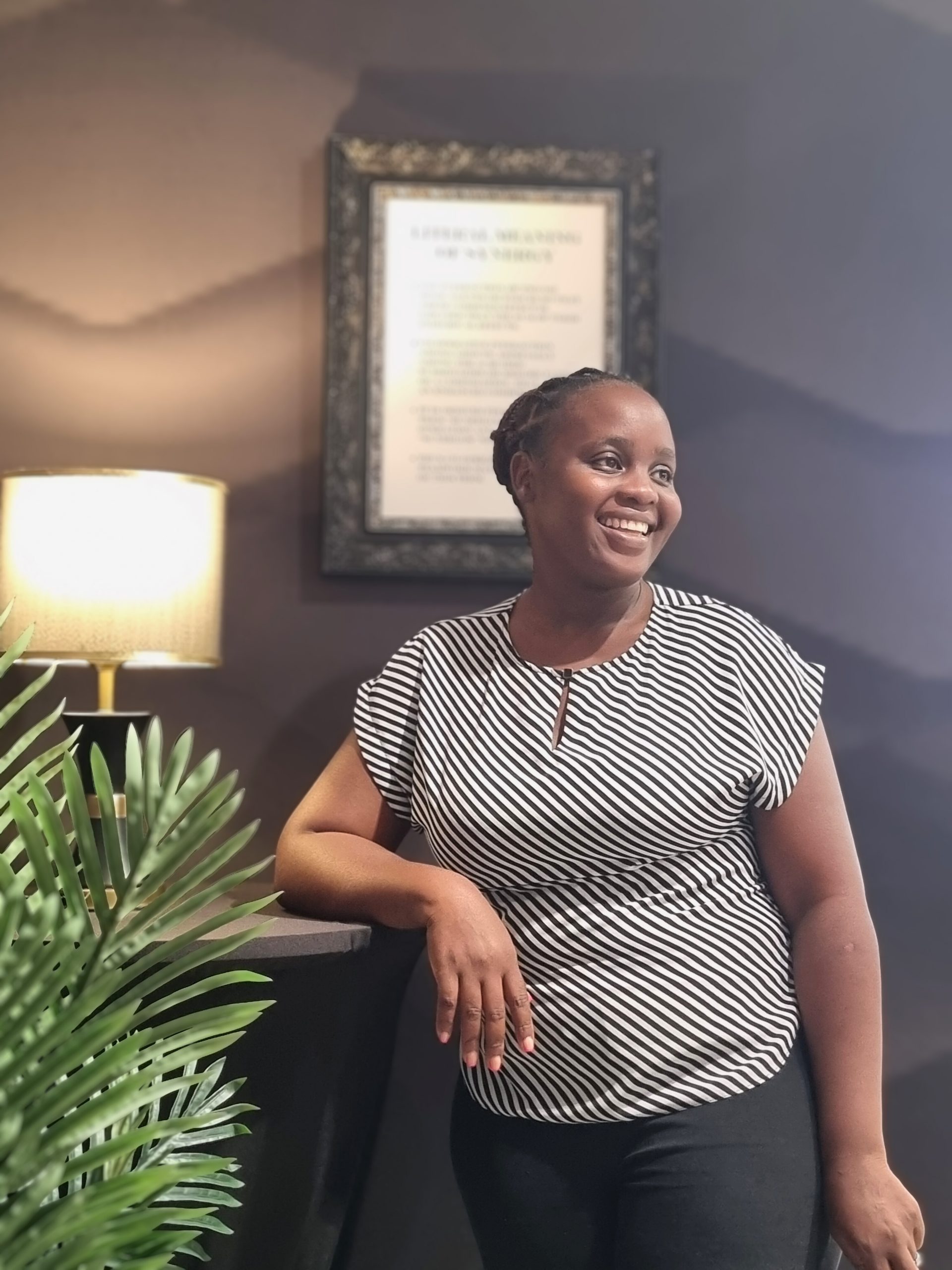
 Dr Doty Ojwach is a virologist and Senior Scientist whose work bridges HIV pathogenesis, maternal-foetal immunity, and viral evolution. She earned her PhD in Virology from the University of KwaZulu-Natal’s HIV Pathogenesis Programme, South Africa, where she investigated HIV replication dynamics and viral protein function. A former SANTHE fellow and two‑time SANTHE Trainee of the Year (2017, 2018), she was also selected as a Lindau Nobel Laureate Young Scientist in 2020. Her earlier research included extensive cloning and functional analysis of HIV reverse transcriptase and integrase variants to identify viral vulnerabilities relevant to vaccine development – earning her the title “Replica” with the SANTHE SuperScientists.
At Stellenbosch University’s Reproductive Immunology Research Consortium in Africa unit in South Africa, Dr Ojwach, as a Senior Scientist, now focuses on understanding how maternal HIV and/or CMV co-infection shapes foetal immune development, beginning with immunological interactions in the placenta. See some RIRCA interviews here.
Driven by a commitment to improving health outcomes in Africa, she contributes vital insights into viral immunology and maternal-child health.
Your work has looked at viral evolution, HIV pathogenesis, and maternal-foetal immunity. What drew you to each of these fields?
My entry point was virology, specifically understanding how HIV evolves and adapts within the host. Viral evolution and pathogenesis fascinated me because they reveal how small genetic changes can have profound consequences for immune escape, disease progression, and transmission. Over time, this interest naturally expanded toward maternal–foetal immunity, where the virus intersects with a uniquely complex immunological environment. Pregnancy represents a finely balanced immune state and understanding how chronic viral infections such as HIV perturb this balance particularly at the placental interface felt like a critical and underexplored frontier with direct relevance to infant health outcomes.
What current research questions are you most passionate about?
I am most passionate about understanding how in utero exposure to HIV and other chronic viral infections reprograms the developing immune system before birth. Specifically, I am interested in how placental immune cells integrate signals from maternal infection, antiretroviral therapy, and co-infections, and how this shapes neonatal immune competence, susceptibility to infection, and long-term immune trajectories.
At RIRCA, you focus on how maternal HIV and CMV co-infection shapes foetal immune development. What is the most urgent unanswered question in this space?
One of the most urgent unanswered questions is how dual exposure to HIV and CMV alters placental immune regulation in ways that are not clinically apparent at birth but have lasting consequences for immune development. We still do not fully understand which placental immune pathways are protective versus maladaptive in this context, nor how antiretroviral therapy modifies these responses. Answering this is essential for improving outcomes among HIV-exposed but uninfected infants, a growing population globally.
You’ve been recognised as a SANTHE Trainee of the Year and a Lindau Nobel Laureate Young Scientist. How have these awards shaped your scientific career?
These recognitions were affirming at critical stages of my career. SANTHE provided not only rigorous scientific training but also a strong sense of community and mentorship, which shaped how I approach collaborative science. Being selected as a Lindau Nobel Laureate Young Scientist was particularly transformative – it broadened my perspective on the global scientific enterprise and reinforced the importance of curiosity-driven research coupled with social responsibility. Both experiences strengthened my confidence and ambition as an African scientist working on globally relevant problems.
How did it feel to become a Super Scientist superhero? We know you like to volunteer at youth health programs. Does being a superhero help?
Becoming a Super Scientist superhero was unexpectedly powerful. While it was playful, it created an immediate connection with young people who might not otherwise see scientists as relatable. In youth health programmes, especially, representation matters. If a superhero persona helps demystify science, spark curiosity, or make health conversations more approachable, then it serves a very real purpose beyond the costume.
What new technologies excite you most in the fight against HIV?
I am particularly excited by advances in single-cell and spatial biology technologies, which allow us to study immune responses in their native tissue context. In parallel, long-acting antiretrovirals and next-generation vaccine platforms are reshaping how we think about prevention and treatment. The integration of these technologies, linking molecular resolution with clinical outcomes, holds enormous promise for HIV research.
What advice would you give young African researchers who want to pursue careers in virology or immunology?
First, build a strong foundation in the fundamentals rigorous experimental design and critical thinking are universal currencies in science. Second, seek out mentors and collaborative networks early; science is not a solitary pursuit. Finally, do not underestimate the value of research questions rooted in African health contexts. These questions are globally relevant, and African scientists are uniquely positioned to lead them.
What next big scientific question or project would you most like to tackle in the next phase of your career?
In the next phase of my career, I would like to systematically dissect how antiretroviral drugs interact with placental immune pathways, independent of HIV infection itself. Understanding drug-immune-tissue interactions during pregnancy could inform safer therapeutic strategies and improve maternal and infant health outcomes well beyond HIV.
What inspires you outside of immunology?
I am deeply inspired by community engagement and mentorship, particularly working with young people. Seeing curiosity sparked and confidence grow whether in science, health awareness, or education more broadly reminds me why translational and socially grounded research matters. I also draw inspiration from stories of resilience, both within and outside the scientific world.
Interview by Bonamy (Bon) Holtak