


Our immune system doesn’t just fight infections; it also helps detect and eliminate abnormal cells. Inborn Errors of Immunity (IEI), genetic conditions that disrupt immune function, can therefore increase susceptibility to cancer.
Researchers analysed 4,540 children and adults with IEI across 30 referral centres and found that 248 patients (5.5%) developed malignancy (Figure 1).
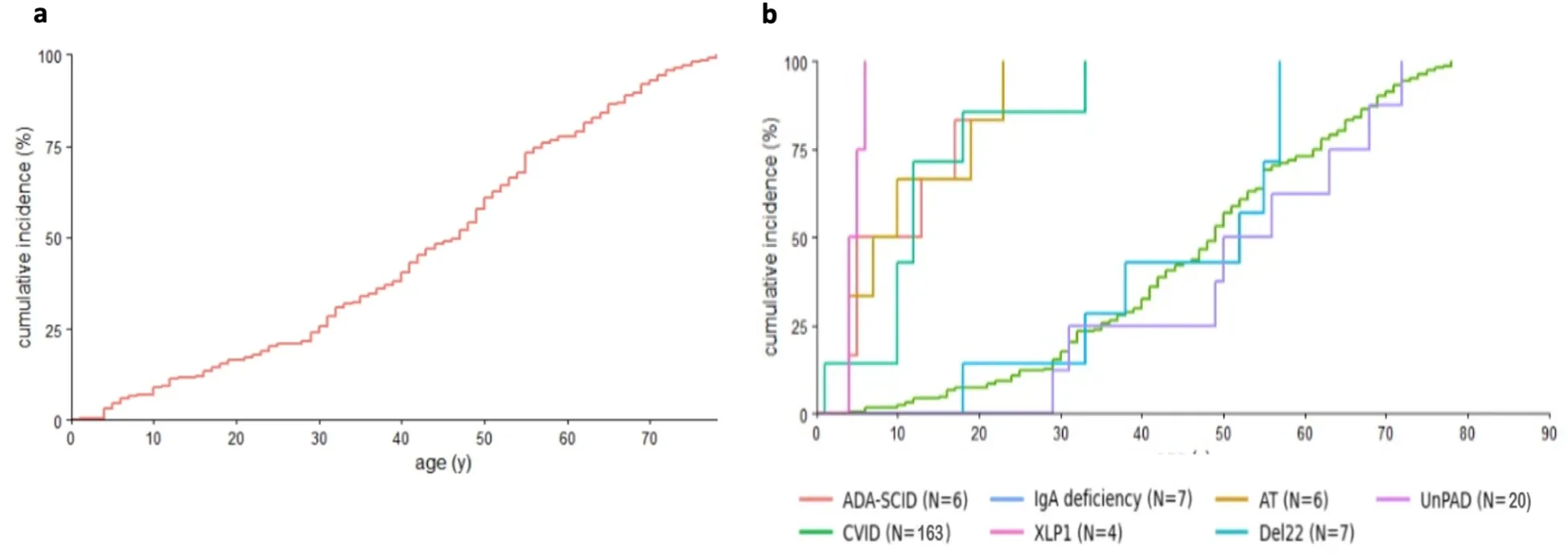
Figure 1: Age at malignancy in the whole cohort (a) and per IEI category (b). The median age at the time of the cancer diagnosis for the entire cohort was 42 years (range: 1–78)-(a). Patients with IgA deficiency had a higher median age, 52 years (range 18-57). Individuals with syndromic features or DNA repair defects were diagnosed significantly earlier, with median ages of 11years (range 1-33) for 22q11.2 deletion syndrome (Del 22) and 8.5 years (range 4-23) for Ataxia-Telangiectasia (AT) respectively-(b). AT, ataxia telangiectasia; CVID, common variable immunodeficiency; Del22, 22q11.2 deletion syndrome; SCID, severe combined immunodeficiency; unPAD, unclassified primary antibody deficiency; XLP-1, X-linked lymphoproliferative disease type 1.
Cancer also tended to occur earlier than in the general population, with a median age of 44 years. In around 30% of cases, cancer was the first clinical clue that led to an IEI diagnosis.
Which cancers were most common:
• Non-Hodgkin lymphoma — 21.7%
• Skin cancers — 11.2%
• Gastric adenocarcinoma — 10.4%
Common Variable Immunodeficiency (CVID) had the highest prevalence of malignancy among the IEI groups studied.
Defective immune surveillance, chronic inflammation and underlying genetic instability can all contribute to cancer development, although the specific risk varies substantially between IEI subtypes.
Cancer can sometimes be the first sign of an underlying immune disorder. Recognising these links could support earlier IEI diagnosis, tailored cancer surveillance and more personalised care.
Journal article: Milito, C., et al. 2026. Malignancies in inborn errors of immunity: a retrospective-prospective study on a large Italian cohort of pediatric and adult patients. Frontiers in Immunology.
Summary by Stefan Botha