


The nervous and immune systems were once viewed as separate defence systems. Now, researchers show they are in constant communication and group 2 innate lymphoid cells (ILC2s) are emerging as important players in this conversation (Figure 1).
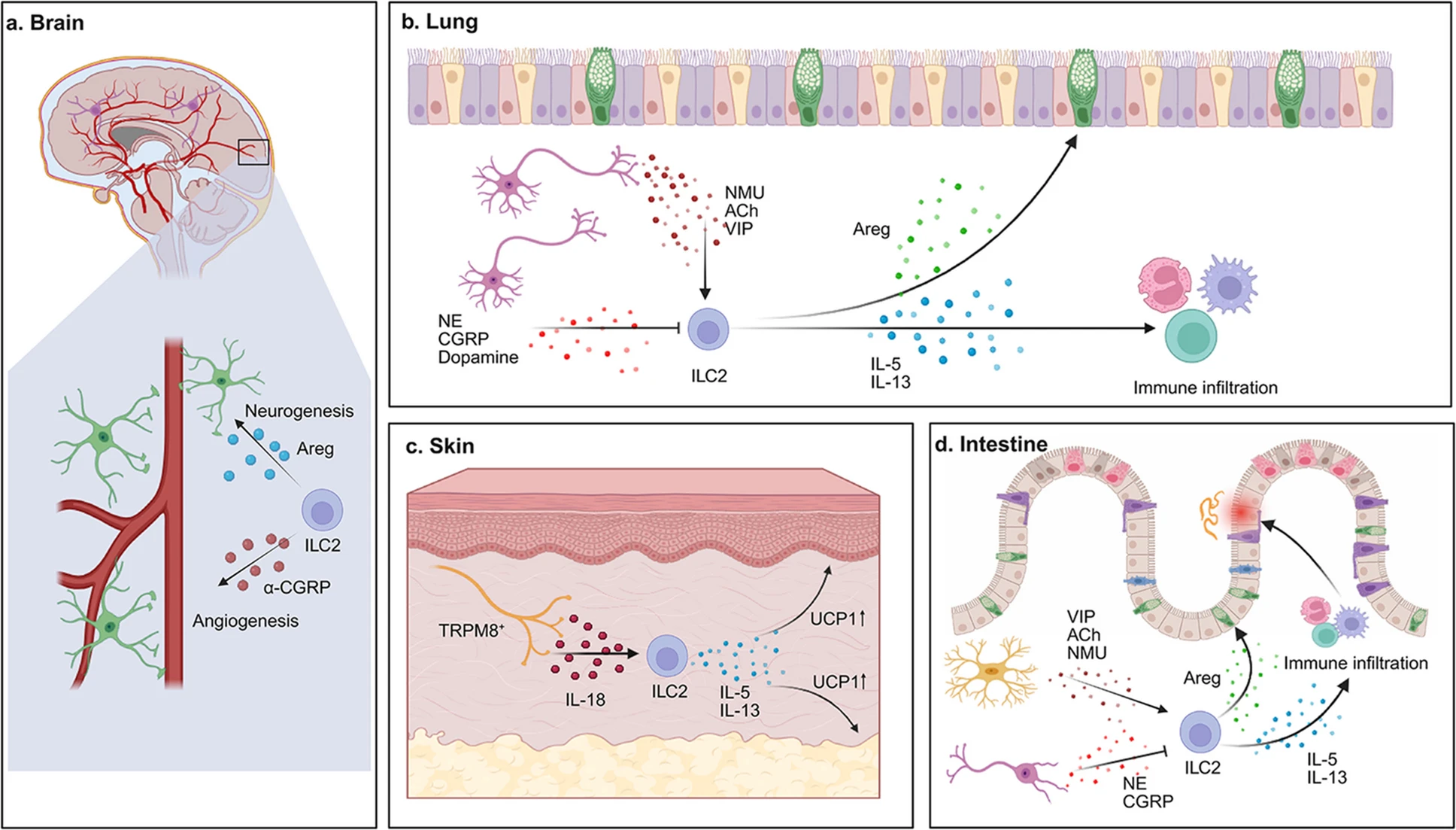
Figure 1: ILC2s as central mediators of neuroimmune crosstalk across tissues. a In the brain, meningeal and perivascular ILC2s produce α-CGRP and amphiregulin (Areg), promoting angiogenesis and neurogenesis. b In the lung, neuronal mediators, including neuromedin U (NMU), acetylcholine (ACh), and vasoactive intestinal peptide (VIP), activate ILC2s, whereas norepinephrine (NE), dopamine, and CGRP inhibit their activity. Activated ILC2s produce IL-5, IL-13, and Areg, driving immune cell infiltration and tissue repair. c In the skin, transient receptor potential cation channel subfamily M member 8-positive (TRPM8+) sensory neurons secrete IL-18 to activate ILC2s, which in turn produce IL-5 and IL-13 to induce uncoupling protein 1 (UCP1) expression and thermogenic responses. d In the intestine, enteric neurons release VIP, NMU, NE, ACh, and CGRP to regulate ILC2 activity. Activated intestinal ILC2s produce IL-5, IL-13, and Areg, promoting immune cell recruitment, mucosal homeostasis, and anti-helminth immunity. Created in BioRender. https://BioRender.com/an4t86o
In tissues such as the lungs, intestine and skin, ILC2s sit close to nerve fibres and respond to neurotransmitters and neuropeptides.
Some neural signals, such as neuromedin U (NMU), activate ILC2s and promote IL-5 and IL-13 production, while signals including CGRP, noradrenaline and dopamine can suppress their activity.
This creates a kind of “neural rheostat”, allowing factors such as stress, feeding and circadian rhythms to influence immune responses.
ILC2-derived cytokines can also act back on neurons, creating feedback loops that amplify or regulate type 2 immunity. ILC2s are found at CNS borders, including the meninges and choroid plexus, where studies suggest they can influence neural development, neuroinflammation, ageing and tissue repair.
However, ILC2s are not always protective. In models of neuroinflammation, they can activate myelin-reactive T cells and contribute to demyelination, highlighting how strongly their function depends on tissue and disease context.
ILC2s are emerging as cellular interfaces between immunity, the nervous system and metabolism. Understanding this communication could open new therapeutic avenues for allergic disease, inflammatory disorders and neurodegeneration, but translating these findings to humans will require careful, tissue-specific targeting.
Journal article: Liu Q, et al. 2026. Group 2 innate lymphoid cells: cellular interfaces in neural–immune crosstalk. Immunity & Inflammation.
Summary by Stefan Botha