


Myelofibrosis is a progressive bone marrow disorder in which normal blood-forming tissue is increasingly replaced by fibrotic scar tissue. Although allogeneic haematopoietic stem cell transplantation (allo-HSCT) can reverse this fibrosis, the cellular mechanisms driving recovery have remained poorly understood.
A new study provides a detailed look at how the bone marrow microenvironment is remodelled during fibrosis reversal, identifying specific stromal and immune cell populations that contribute to disease progression (Figure 1).
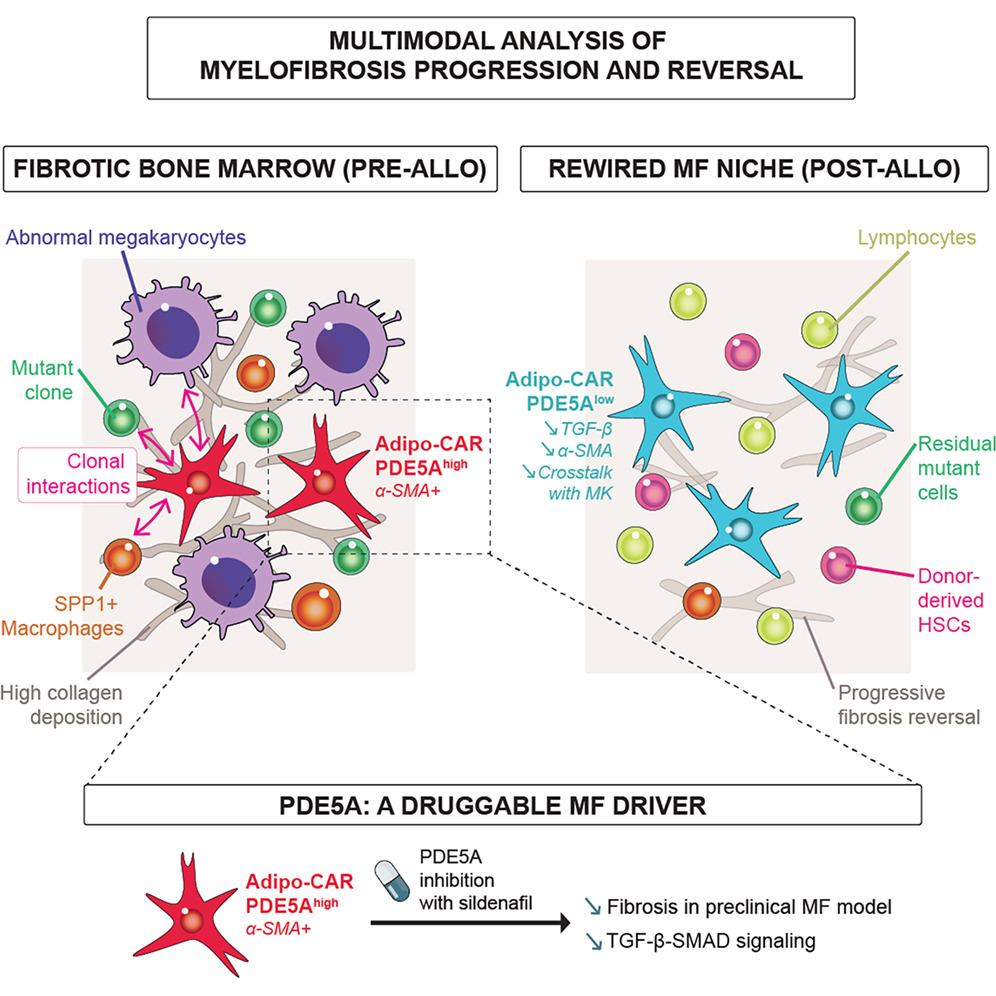
Figure 1: Graphical abstract.
Using a longitudinal single-cell atlas of 29 bone marrow biopsies collected before and after allo-HSCT, researchers identified several important cellular interactions:
Adipo-CAR stromal cells: Adipogenic CXCL12-abundant reticular (Adipo-CAR) cells emerged as the predominant fibrosis-associated stromal population.
SPP1+ macrophages: These inflammatory macrophages interacted with stromal cells and malignant haematopoietic progenitors, helping establish a pro-fibrotic bone marrow environment.
Disrupted cellular communication: Allo-HSCT reversed TGF-β-associated interactions between Adipo-CAR cells and megakaryocytes. Importantly, these fibrotic cellular neighbourhoods were dismantled before substantial histological regression of fibrosis and extracellular matrix remodelling.
The researchers also identified CD93 as a potential mediator of interactions between mutant haematopoietic cells and the surrounding stromal environment in both JAK2- and CALR-mutant disease.
One particularly interesting finding involved phosphodiesterase 5A (PDE5A), which marked activated fibrotic stromal cells. Genetic and pharmacological inhibition of PDE5A reduced bone marrow fibrosis in experimental models, suggesting a potential therapeutic target beyond stem cell transplantation.
The study also identified persistent mutant macrophages following allo-HSCT, highlighting the complexity of restoring a healthy bone marrow environment even after transplantation.
These findings reveal that reversing fibrosis involves more than simply replacing diseased haematopoietic cells. It also requires dismantling the abnormal cellular interactions that sustain the fibrotic bone marrow niche.
By identifying the stromal–immune interactions involved in fibrosis, this work opens new avenues for developing targeted antifibrotic therapies for myelofibrosis.
Journal article: Benabid, A., et al. 2026. Longitudinal mapping reveals stromal-immune mechanisms underlying reversal of bone marrow fibrosis in myelofibrosis. Immunity.
Summary by Stefan Botha