


Two people can be the same chronological age but have very different immune systems. Now, researchers have mapped distinct patterns of human immune ageing, revealing a potential blood-based marker associated with future health outcomes (Figure 1).
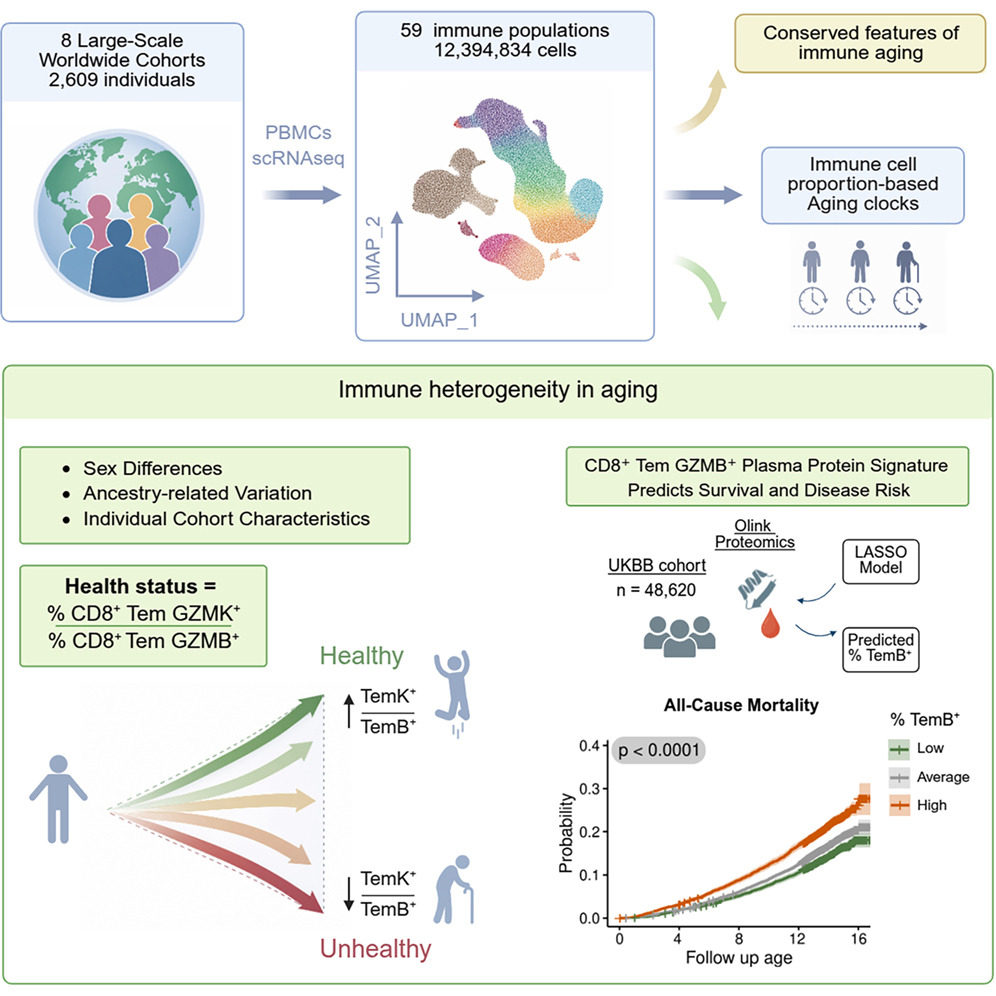
Figure 1: Graphical abstract.
The study analysed approximately 12.4 million immune cells from 2,609 adults aged 20 to over 90 years, alongside long-term health data from the UK Biobank.
The team focused on two populations of effector memory CD8⁺ T cells distinguished by their production of granzyme B (GZMB) or granzyme K (GZMK).
GZMB⁺ cells are associated with the direct killing of target cells, while GZMK⁺ cells may contribute to inflammatory signalling and the recruitment of other immune cells.
By mapping the balance between these populations, researchers identified different immune ageing trajectories. In the UK Biobank analysis, a protein-based model estimated this balance in 50,000 participants and linked a more GZMB-dominant profile at baseline to a higher subsequent risk of death and chronic conditions, including type 2 diabetes, hypertension, liver disease and renal failure.
These findings suggest that immune ageing may provide clues about future health risks before clinical disease becomes apparent. The researchers are now working towards a more accessible blood test that could help identify signs of immune dysfunction earlier in life.
This immune-cell balance is a potential risk marker, not a diagnosis or a proven cause of age-related disease. Further validation will be needed before it can be used routinely in clinical practice.
Understanding why immune systems age differently could help move healthcare towards earlier risk detection and more personalised approaches to healthy ageing.
Journal article: Terekhova, M., et al. 2026. Single-cell analyses of global cohorts outline determinants of immune aging and link the ratio of GZMK⁺ to GZMB⁺ Tem cells to health trajectories. Immunity.
Summary by Stefan Botha