


A new review highlights the pivotal role of the nuclear factor kappa B (NF-κB) signalling pathway in regulating immunity and inflammation, while examining emerging strategies to therapeutically target this master regulator (Figure 1). Although NF-κB is essential for protecting the body against infection, persistent or uncontrolled activation contributes to a wide range of autoimmune, inflammatory and immunodeficiency disorders, making it one of the most intensively studied pathways in immunology.
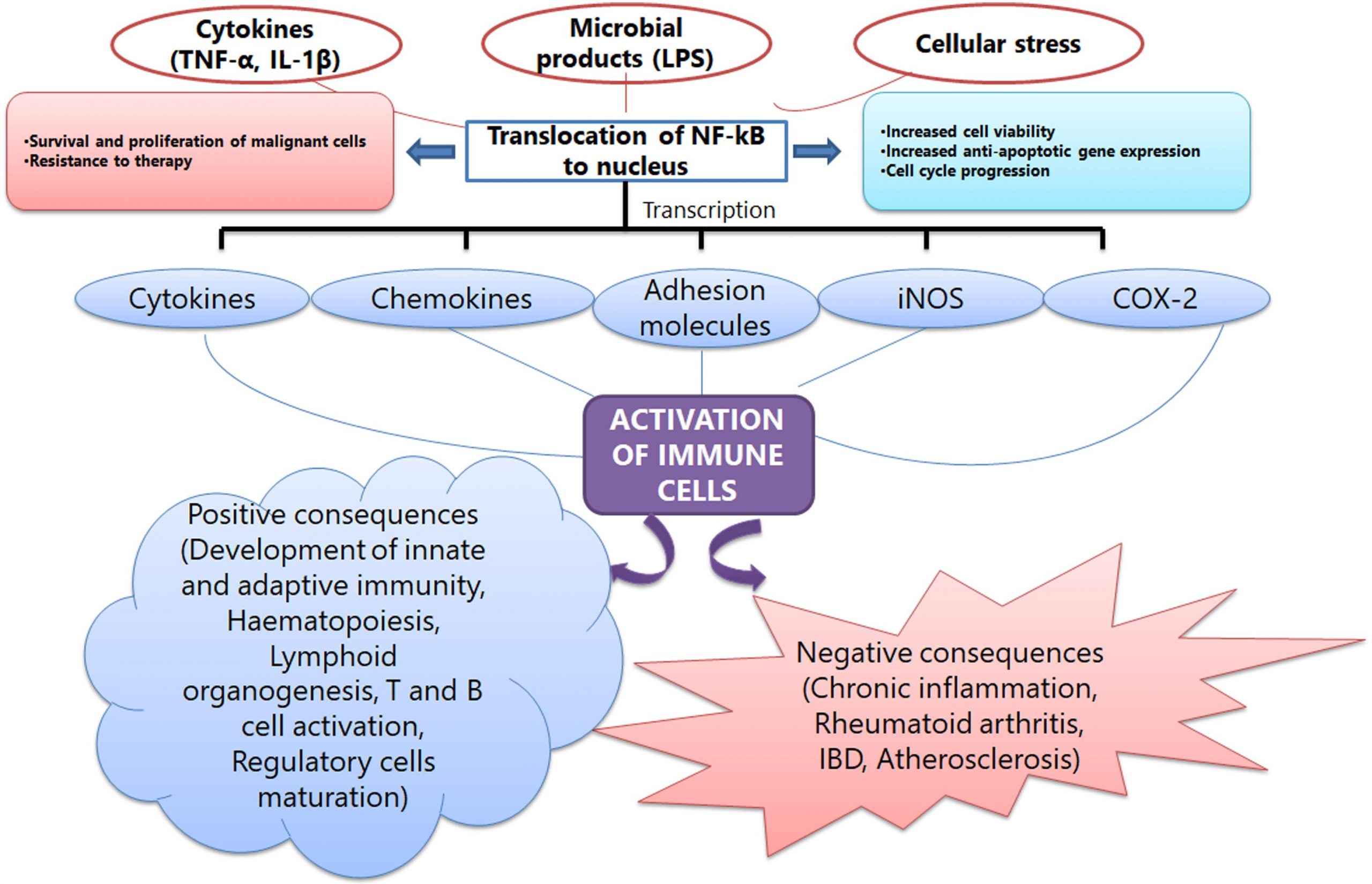
Figure 1: NF-κB signaling pathway: Activation of immune cells and its consequences. COX-2, cyclooxygenase-2; IBD, inflammatory bowel disease; IL-1β, interleukin-1β; iNOS, inducible nitric oxide synthase; LPS, lipopolysaccharides; TNF-α, tumor necrosis factor-α.
The review also discusses how advances in precision medicine may allow clinicians to selectively modulate NF-κB activity without disrupting its vital physiological functions.
NF-κB is a family of transcription factors that controls the expression of hundreds of genes involved in innate and adaptive immunity, inflammation, cell survival and tissue repair. It is rapidly activated in response to inflammatory cytokines such as TNF-α and IL-1β, microbial products recognised by Toll-like receptors, and a variety of cellular stress signals.
Under normal conditions, NF-κB activation is tightly regulated, allowing the immune system to mount effective responses against pathogens before returning to a resting state. However, chronic activation drives sustained production of inflammatory mediators, contributing to tissue damage and disease.
The review outlines two major NF-κB signalling pathways. The canonical pathway generates rapid inflammatory responses and is activated by infections and pro-inflammatory cytokines, whereas the non-canonical pathway regulates longer-term immune processes, including B-cell maturation, lymphoid tissue development and immune tolerance.
Because NF-κB sits at the centre of numerous immune signalling networks, its dysregulation has far-reaching consequences.
Persistent NF-κB activation contributes to chronic inflammatory diseases such as rheumatoid arthritis, inflammatory bowel disease, psoriasis and asthma, where excessive production of inflammatory cytokines drives ongoing tissue damage.
Inherited defects affecting components of the NF-κB pathway can also cause primary immunodeficiencies and autoinflammatory syndromes. Mutations in proteins such as NEMO, LUBAC and A20 disrupt the delicate balance between immune activation and immune regulation, leading to recurrent infections, excessive inflammation or autoimmunity.
The review also highlights growing evidence linking NF-κB to cancer biology. Beyond promoting inflammation, NF-κB supports tumour cell survival, metabolic adaptation and resistance to immune checkpoint inhibitors by shaping an immunosuppressive tumour microenvironment.
Several current therapies already act indirectly on NF-κB signalling. These include biologic drugs that block inflammatory cytokines such as TNF-α, IL-1 and IL-6, as well as proteasome inhibitors that prevent NF-κB activation.
Researchers are now pursuing more selective approaches that directly target components of the signalling pathway, including IKKβ, NEMO, NF-κB-inducing kinase (NIK) and MALT1. Other emerging strategies aim to manipulate the ubiquitin system, a network of enzymes that finely regulates NF-κB activation by adding or removing ubiquitin molecules from signalling proteins.
To improve safety, several innovative delivery platforms, including nanoparticles, proteolysis-targeting chimeras (PROTACs), epigenetic therapies and RNA-based approaches, are being investigated to achieve tissue-specific inhibition while minimising systemic side effects.
A recurring theme of the review is that successful NF-κB therapies will likely require precision modulation rather than complete pathway inhibition. Since NF-κB is essential for normal immune function, indiscriminate suppression could increase susceptibility to infection and impair tissue repair.
While many of the newest concepts, including ubiquitin code editing and spatial immunology, remain in the experimental stage, the review underscores how rapidly the field is evolving. Future advances will depend on translating these mechanistic insights into safe, clinically effective therapies that can selectively rebalance immune responses without compromising normal immunity.
Journal article: Sharma Y, et al. 2026. NF-κB Signaling Pathway: A Central Hub in the Pathogenesis and Therapeutic Targeting of Immunological Diseases. Gene Expression.
Summary by Stefan Botha