

New research shows that interactions between microbes and immune cells shortly after birth play a critical role in setting long-term immune balance in the skin (Figure 1). The study reveals that beneficial commensal microbes drive the temporary accumulation of monocytes in neonatal skin, a process that helps prevent excessive inflammation later.
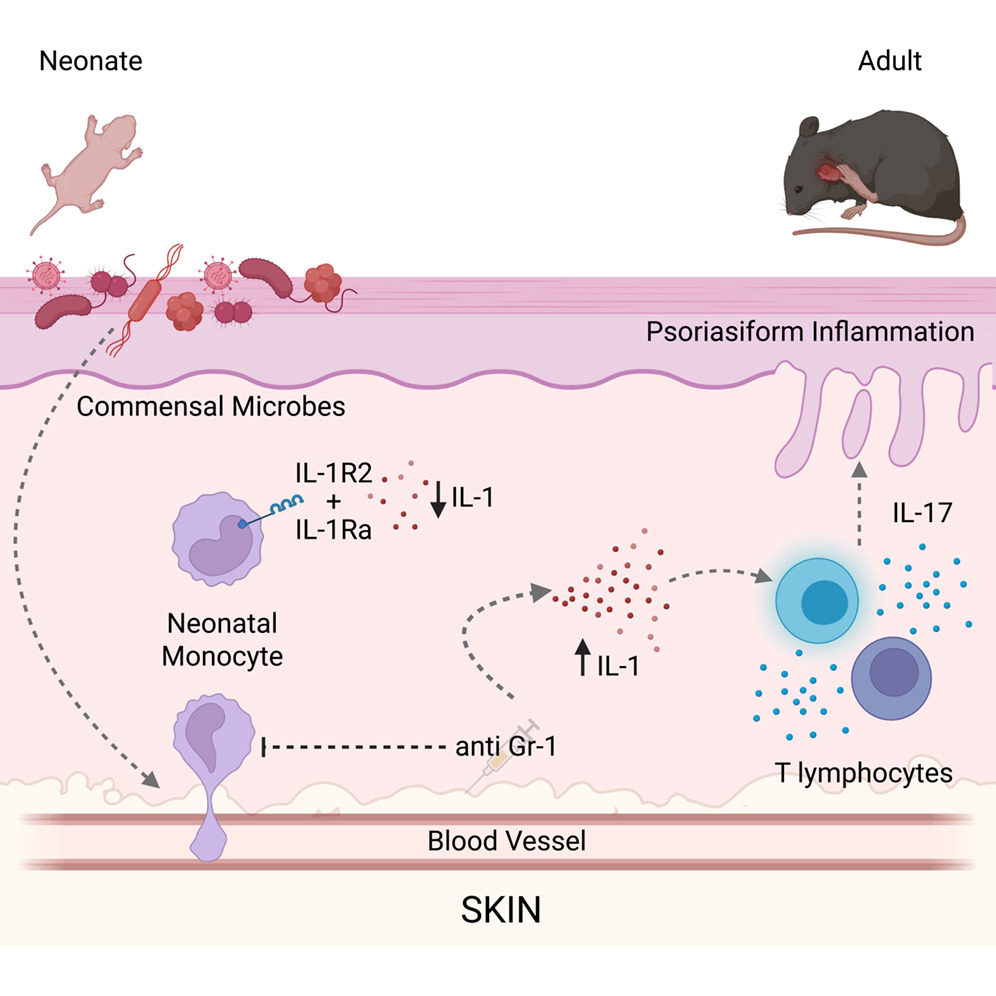
Figure 1: Graphical abstract.
These early-life monocytes act as immune regulators. When researchers briefly removed them during the postnatal period, skin T cells began producing abnormally high levels of the inflammatory cytokine IL-17A, especially among CD4+ T cells. This exaggerated immune response was sufficient to worsen inflammatory skin disease, highlighting how small disruptions early in life can have lasting consequences.
Further analysis showed that neonatal skin monocytes are rich in molecules that dampen IL-1 signalling, a pathway known to fuel type 17 immune responses. In animal models, excessive IL-1 receptor signalling in T cells drove the heightened inflammation seen when monocytes were absent.
Together, the findings demonstrate that commensal microbes guide a critical wave of monocytes into newborn skin, helping establish immune homeostasis at this barrier surface. This early immune education appears essential for preventing inflammatory skin disorders and underscores how microbial exposure in infancy can shape health trajectories long into life.
Journal article: Dhariwala, M.O., et al. 2026. Commensal-myeloid crosstalk in neonatal skin regulates interleukin-1 signaling and cutaneous type 17 inflammation. Immunity.
Summary by Stefan Botha