


Immune checkpoint inhibitors (ICIs) have transformed cancer treatment by releasing the brakes on anti-tumour T cells. But this immune activation can also cause immune-related adverse events, including potentially severe colitis.
Researchers found that patients with higher B-cell levels before treatment had an increased risk of developing ICI-associated colitis (Figure 1). In preclinical models, B-cell activation occurred early, before inflammatory T cells expanded and damaged intestinal tissue (Figure 1).
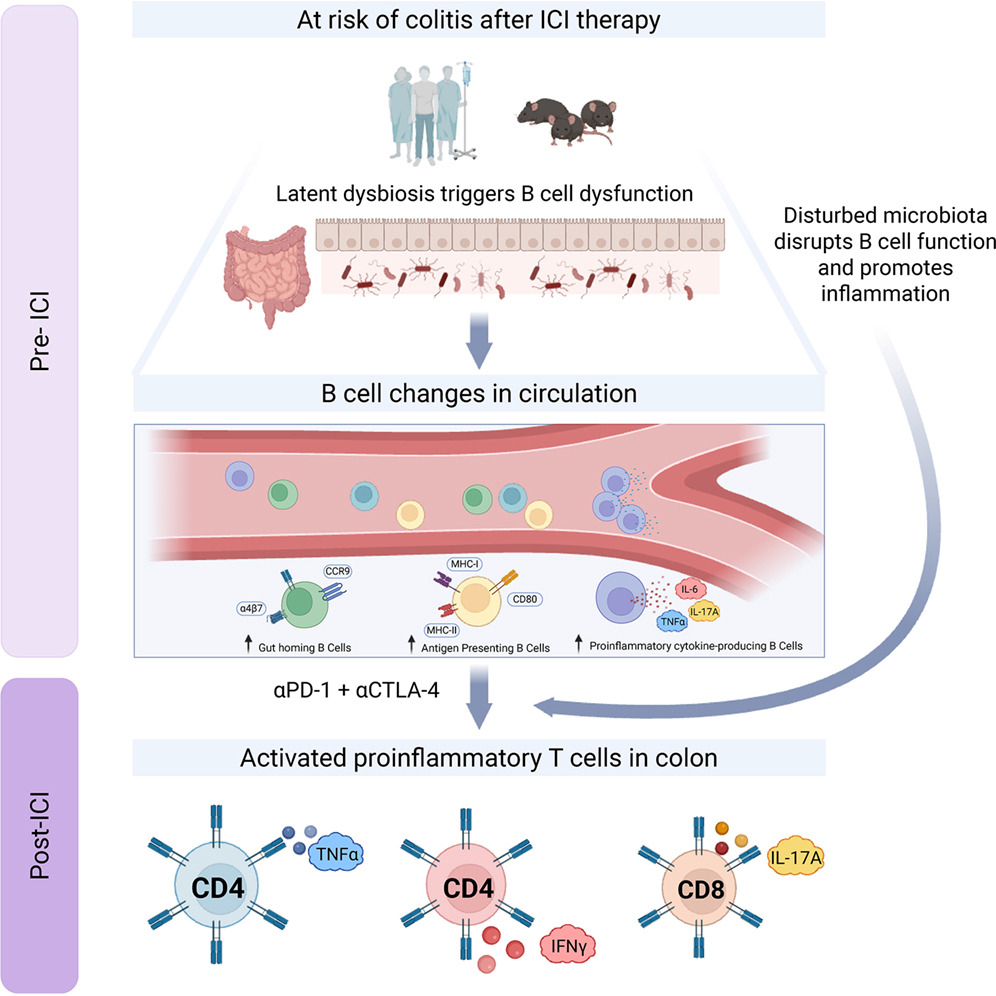
Figure 1: Graphical abstract.
When researchers depleted B cells, colitis severity and intestinal damage were reduced, suggesting that B cells may help initiate and amplify the inflammatory cascade.
The gut microbiome may also be involved. Colitis-susceptible models showed altered gut bacteria and abnormal B-cell activation. Restoring the microbiome through faecal microbiota transplantation reduced inflammation and disease severity in preclinical models.Changes in B-cell activity may provide an early blood-based biomarker for identifying patients at risk of ICI-related colitis, potentially before symptoms appear.
The findings also raise the possibility of preventing toxicity by targeting B-cell responses or the microbiome, although these approaches require further clinical validation.
Cancer immunotherapy does more than activate T cells. Understanding how B cells, T cells and the microbiome interact could help make immunotherapy safer without compromising its anti-cancer effects.
Journal article: Turner, N. et al. 2026. B cell-guided inflammatory cascade perpetuates ICI-mediated colitis. Cell Reports.
Summary by Stefan Botha