


Unlike P. falciparum, there is currently no licensed vaccine specifically targeting Plasmodium vivax partly because we still know relatively little about the antibody targets that provide effective protection.By screening antibodies from P. vivax-infected individuals, they identified two previously uncharacterised B-cell epitopes on the parasite’s circumsporozoite protein (PvCSP).
One epitope, PvCSP-B/NAGG, stood out. A monoclonal antibody called GRAM-4 recognised this region and inhibited parasite movement through cells, hepatocyte invasion and subsequent liver-stage development in vitro.
Researchers then solved the GRAM-4–PvCSP-B/NAGG structure at 2.65 Å, revealing exactly how the antibody binds its target at the atomic level (Figure 1).
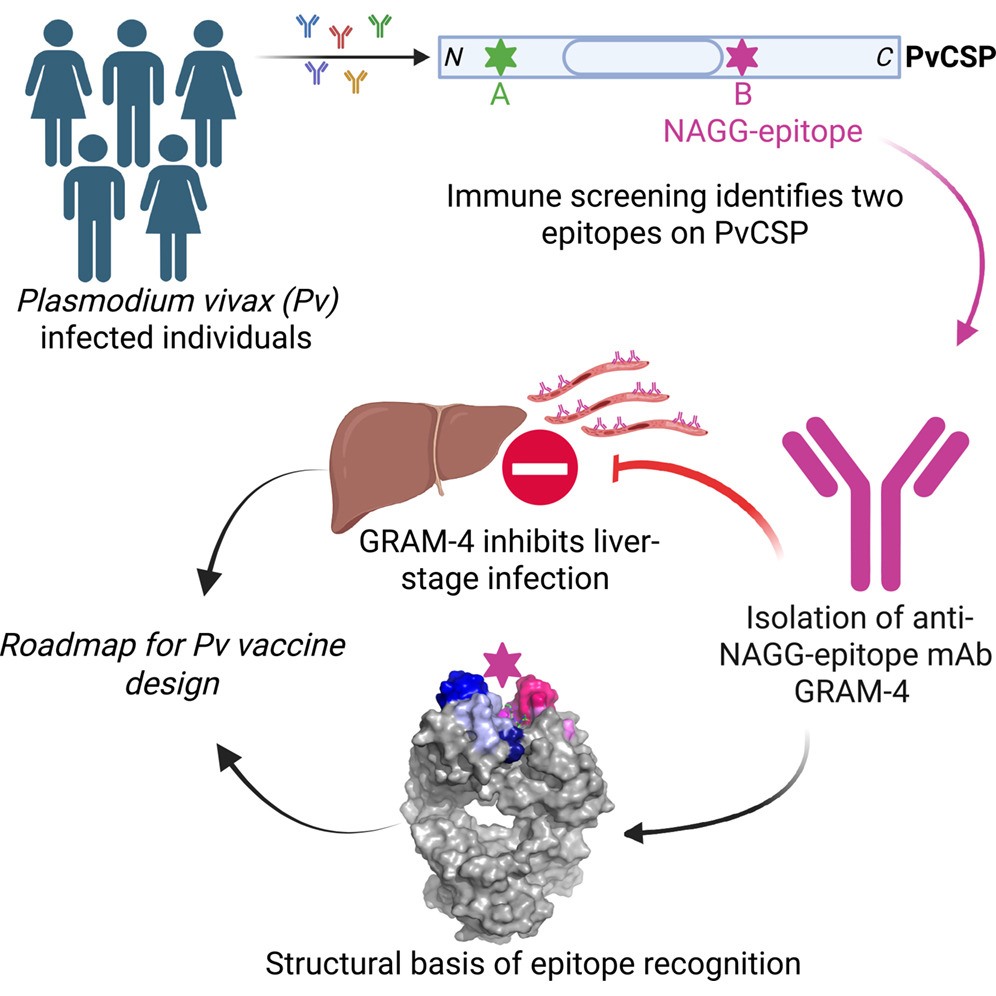
Figure 1: Graphical abstract.
Identifying antibodies that can block P. vivax before it establishes infection, and understanding precisely where they bind, provides a potential blueprint for designing vaccines that focus immune responses on protective epitopes.
Studying naturally acquired human antibodies can reveal the vulnerable points of malaria parasites, helping move P. vivax vaccine development from identifying targets to designing them more precisely.
Journal article: Visweswaran, G.R.R., et al. 2026. Targeting a site of vulnerability on circumsporozoite protein inhibits Plasmodium vivax malaria infection. Immunity.
Summary by Stefan Botha