


Researchers have identified a previously unrecognised subtype of eosinophilic oesophagitis (EoE) that is characterised by joint hypermobility and symptoms of autonomic dysfunction (Figure 1). The findings suggest that recognising this subgroup could improve patient care and quality of life through earlier diagnosis and targeted treatment.
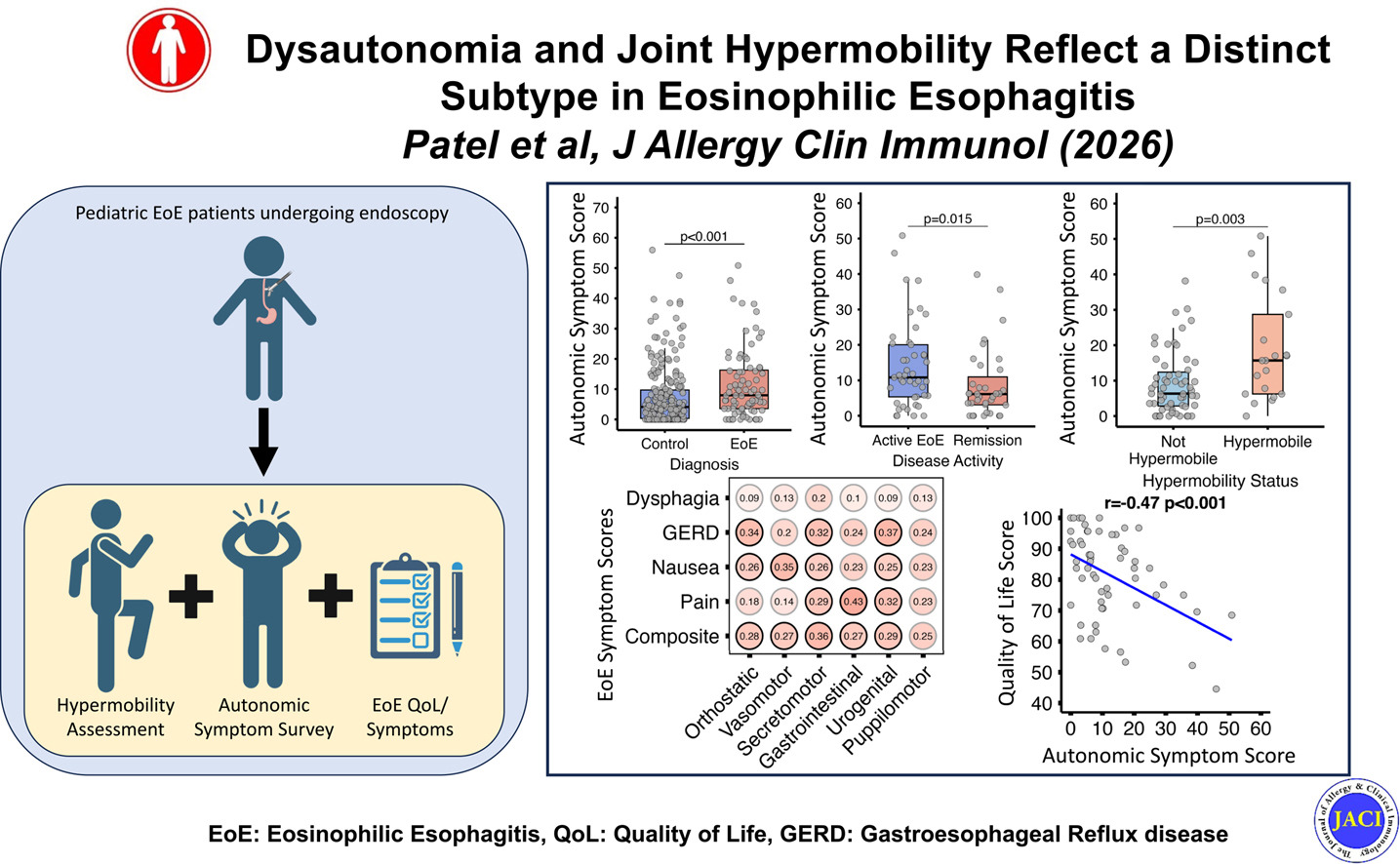
Figure 1: Graphical abstract.
EoE is a chronic allergic inflammatory disease in which the oesophagus becomes inflamed and narrowed, making swallowing difficult and increasing the risk of food becoming lodged in the oesophagus.
The study found that approximately one in four children with EoE had joint hypermobility, a condition in which joints move beyond their normal range of motion. These patients were also more likely to experience symptoms of autonomic dysfunction, particularly chronic lightheadedness when standing, a condition known as orthostatic intolerance.
Researchers assessed 80 children and young adults aged 2–21 years with EoE using validated questionnaires that measured symptoms and health-related quality of life. Patients with both active EoE and joint hypermobility reported a higher burden of autonomic symptoms, with lightheadedness occurring more frequently in girls.
Importantly, this combination of gastrointestinal, musculoskeletal and autonomic symptoms was associated with a significantly poorer quality of life compared with patients who had EoE alone.
Symptoms such as lightheadedness may be overlooked because patients often do not recognise them as clinically significant. Instead, they may report secondary symptoms such as headaches, which can occur after episodes of dizziness on standing.
The findings highlight the importance of routinely screening children with EoE for joint hypermobility and autonomic symptoms during clinical assessment. Early recognition may allow clinicians to address these non-gastrointestinal manifestations using relatively straightforward interventions.
Management of orthostatic symptoms typically includes increasing fluid and salt intake, alongside regular exercise to improve cardiovascular function. Patients with joint hypermobility may also benefit from structured physiotherapy aimed at strengthening the muscles surrounding affected joints, helping to reduce injuries and joint instability.
Beyond their clinical implications, the findings raise important questions about the biology of EoE. The association between allergic oesophageal inflammation, connective tissue hypermobility and autonomic dysfunction suggests these conditions may share underlying mechanisms that have not yet been recognised.
Further studies will be needed to determine whether this subtype is unique to EoE or represents a broader pattern seen across other inflammatory diseases. Understanding these links could provide new insights into the development of EoE and identify novel targets for future therapies.
Journal article: Patel RH, et al. 2026. Dysautonomia and joint hypermobility reflect a distinct subtype in eosinophilic esophagitis. Journal of Allergy and Clinical Immunology.
Summary by Stefan Botha