


A new study highlights significant genetic diversity in African populations within genes linked to humoral inborn errors of immunity (IEIs), a group of rare disorders characterized by impaired antibody production (Figure 1).
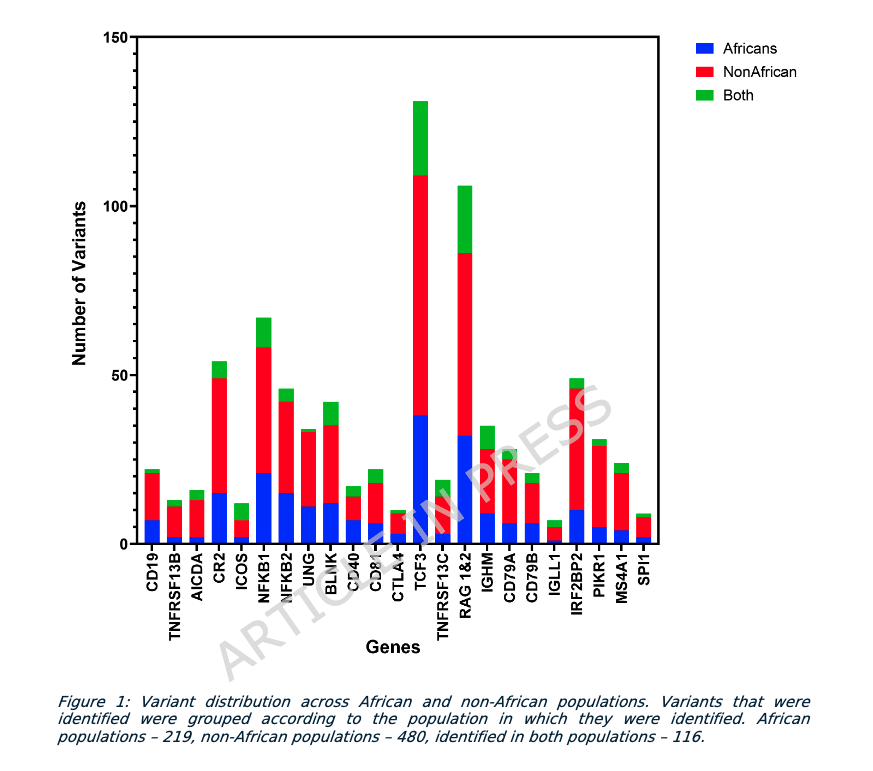
Humoral IEIs are the most diagnosed form of inherited immune deficiency, yet genetic reference data from African populations remain limited. This gap can affect the accuracy of diagnostic genetic testing. To address this, researchers analysed genotype frequency data from the African Genome Variation Database, examining 23 genes known to be associated with antibody deficiencies.
The team identified 815 genetic variants across these genes, with 335 detected in African populations and 219 unique to Africa. Most variants were missense mutations, and four were classified as pathogenic or likely pathogenic in genes including TCF3 and RAG1/2. Notably, nearly half of the variants found in African populations were not previously recorded in ClinVar, a widely used clinical genetics database. Of these unlisted variants, dozens were predicted to have potentially damaging effects.
Some variants were found at relatively high frequencies, suggesting possible population-specific adaptation or functional significance rather than disease causation alone.
Overall, the findings underscore the importance of including diverse populations in genomic databases. Expanding African genetic reference data will be critical for improving the design and interpretation of diagnostic tests for antibody deficiencies and other immune disorders.
Journal article: Hlongwa, L., et al. 2026. Uncovering genetic variation in humoral inborn errors of immunity in African populations: insights from the African genome variation database. Scientific Reports.
Summary by Stefan Botha