


Recurrence remains one of the greatest challenges in the treatment of hepatocellular carcinoma (HCC), particularly following surgical tumour removal or liver transplantation. New research has identified a key metabolic pathway that enables liver cancer cells to evade immune attack, raising the possibility of improving both cancer immunotherapy and long-term patient outcomes (Figure 1).
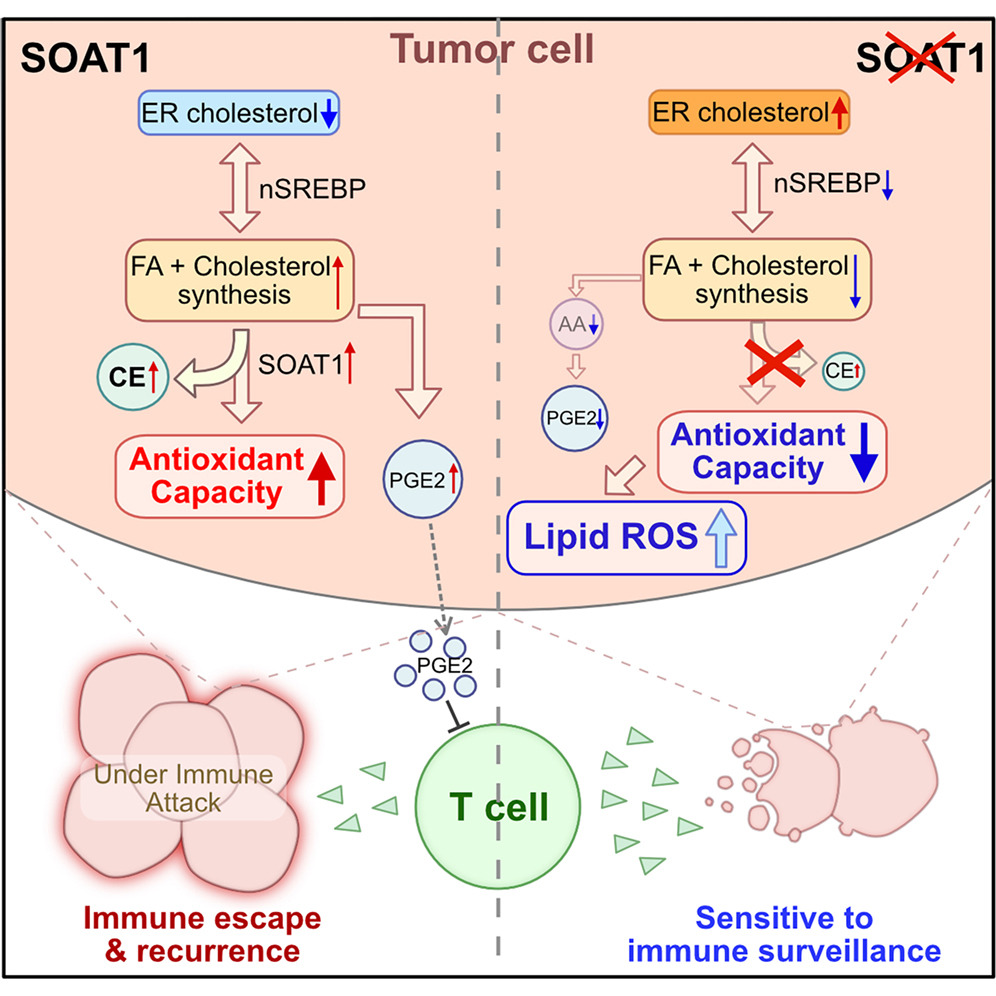
Figure 1: Graphical abstract.
The study found that an enzyme called sterol O-acyltransferase 1 (SOAT1), which converts cholesterol into cholesterol esters for storage, plays a central role in helping tumour cells survive immune-mediated destruction. Blocking this enzyme made liver cancer cells more vulnerable to immune attack and significantly enhanced the effectiveness of several immunotherapies.
To uncover factors associated with cancer recurrence, researchers analysed tumour samples from liver transplant patients with HCC and compared cancers that recurred with those that did not. Combining proteomic profiling with laboratory assays measuring T cell-mediated tumour killing, they identified SOAT1 as a major contributor to tumour immune evasion.
Both genetic deletion and pharmacological inhibition of SOAT1 increased the susceptibility of liver cancer cells to killing by CD8⁺ cytotoxic T cells. In mouse models, SOAT1 inhibition also increased infiltration of CD8⁺ T cells into tumours, suggesting that blocking cholesterol esterification improves anti-tumour immune responses.
Importantly, inhibiting SOAT1 enhanced the activity of several forms of immunotherapy, including anti-PD-1 immune checkpoint blockade and chimeric antigen receptor (CAR)-T cell therapy, indicating that targeting tumour metabolism could complement existing cancer treatments.
Further investigation revealed how SOAT1 protects tumour cells. Cholesterol esterification helped maintain lipid metabolism by supporting the production of unsaturated fatty acids and prostaglandin E2 (PGE2), molecules that contribute to antioxidant defences and protect cancer cells from oxidative stress generated during immune attack.
When SOAT1 activity was blocked, tumour cells lost this metabolic resilience. Disruption of cholesterol and lipid metabolism reduced their antioxidant capacity, making them less able to withstand immune-mediated oxidative damage and therefore more susceptible to destruction by cytotoxic T cells.
The benefits of SOAT1 inhibition extended beyond standard tumour models. The approach also improved immunotherapy responses in obesity-associated liver cancers and under conditions of immunosuppression, both of which can limit anti-tumour immunity and increase the risk of recurrence following transplantation.
These findings suggest that cholesterol esterification is a critical mechanism by which liver cancers evade immune surveillance and survive after treatment. Targeting SOAT1 may therefore represent a promising strategy to reduce HCC recurrence while improving the effectiveness of current immunotherapies.
Journal article: Gu, Y., et al. 2026. Targeting cholesterol esterification sensitizes liver cancer to CD8+ T cell attack by impairing metabolic and redox resilience. Immunity.
Summary Stefan Botha