


Large population study identifies metabolic signatures that improve early risk prediction (Figure 1).
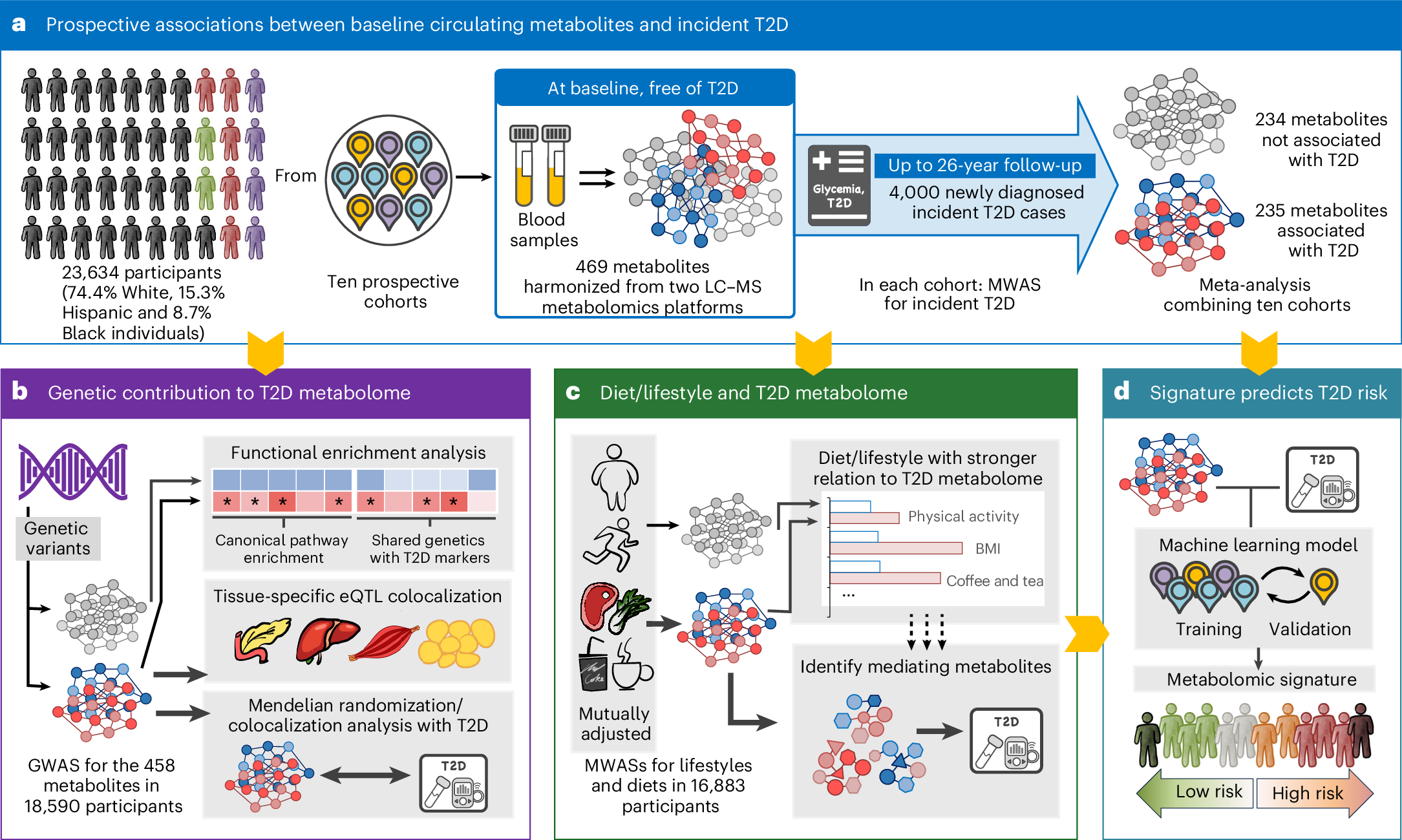
Figure 1: Study overview. a, To identify blood metabolites associated with incident T2D, we analyzed 469 harmonized metabolites in up to 23,634 participants from ten prospective cohort studies. At baseline, participants were free of T2D and other chronic diseases; and blood metabolome was profiled using the metabolomic platforms at Broad Institute or Metabolon Inc. A metabolome-wide association study (MWAS) for incident T2D was conducted in each cohort; and results from the ten cohorts were combined using meta-analysis, identifying 235 metabolites associated with T2D risk. b, We curated meta-analyzed genome-wide association studies (GWASs) for each metabolite using data of up to 18,590 people from eight cohorts, followed by functional analyses, colocalization analyses and Mendelian randomization analyses. c, We conducted MWASs for major modifiable risk factors in up to 16,883 participants from five cohorts, identifying metabolites that potentially mediated the associations between risk factors and T2D risk. d, We used machine learning analyses to develop a metabolomic signature reflecting the complex metabolic states predictive of long-term T2D risk, which may facilitate the identification of high-risk individuals and precision prevention.
Researchers have identified patterns of small molecules in the blood that can predict who is likely to develop type 2 diabetes years before diagnosis. Their study shows that metabolic changes linked to diabetes appear long before standard clinical markers become abnormal.
By analysing blood samples from more than 23,000 initially healthy individuals followed for up to 26 years, the team identified over 200 metabolites associated with future diabetes risk. Many of these molecules reflected pathways involved in insulin resistance, fat accumulation in the liver, and disrupted energy metabolism. These associations remained strong even after accounting for traditional risk factors such as body weight, blood pressure, cholesterol, and lifestyle habits.
The researchers also found that physical activity, diet, and obesity strongly shaped diabetes-related metabolite profiles. Some metabolites appeared to act as biological links between lifestyle behaviours and long-term diabetes risk, helping explain why exercise and dietary patterns have lasting metabolic effects.
Building on these findings, the team developed a risk score based on 44 metabolites that improved prediction beyond age, body mass index, and blood glucose alone. This metabolic signature was able to identify people at high risk well before clinical disease emerged.
This metabolomic risk score captures complex metabolic patterns that precede disease onset and could eventually be used to identify high-risk individuals for early prevention or to monitor responses to lifestyle and dietary interventions.
Together, these findings provide a deeper view of the biological processes that precede type 2 diabetes and support the development of precision prevention strategies that target specific metabolic pathways. While the observational design limits conclusions about causality, genetic analyses strengthened confidence in several associations.
Journal article: Li J. et al. 2026. Circulating metabolites, genetics and lifestyle factors in relation to future risk of type 2 diabetes. Nature Medicine.
Summary by Stefan Botha