


The fluid-filled spaces that surround the lungs, heart, and abdominal organs, known as the serous cavities, have long been recognized for their role in cushioning and lubricating internal organs. However, emerging research highlights that these cavities are also dynamic immune compartments with critical roles in host defence.
A new review synthesises recent advances showing that the peritoneal, pleural, and pericardial cavities are not passive spaces but active reservoirs of immune cells (Figure 1). These cavities generate effector cells during infection, maintain long-lived immune populations, and coordinate closely with surrounding adipose tissue and lymphoid structures to regulate inflammation.
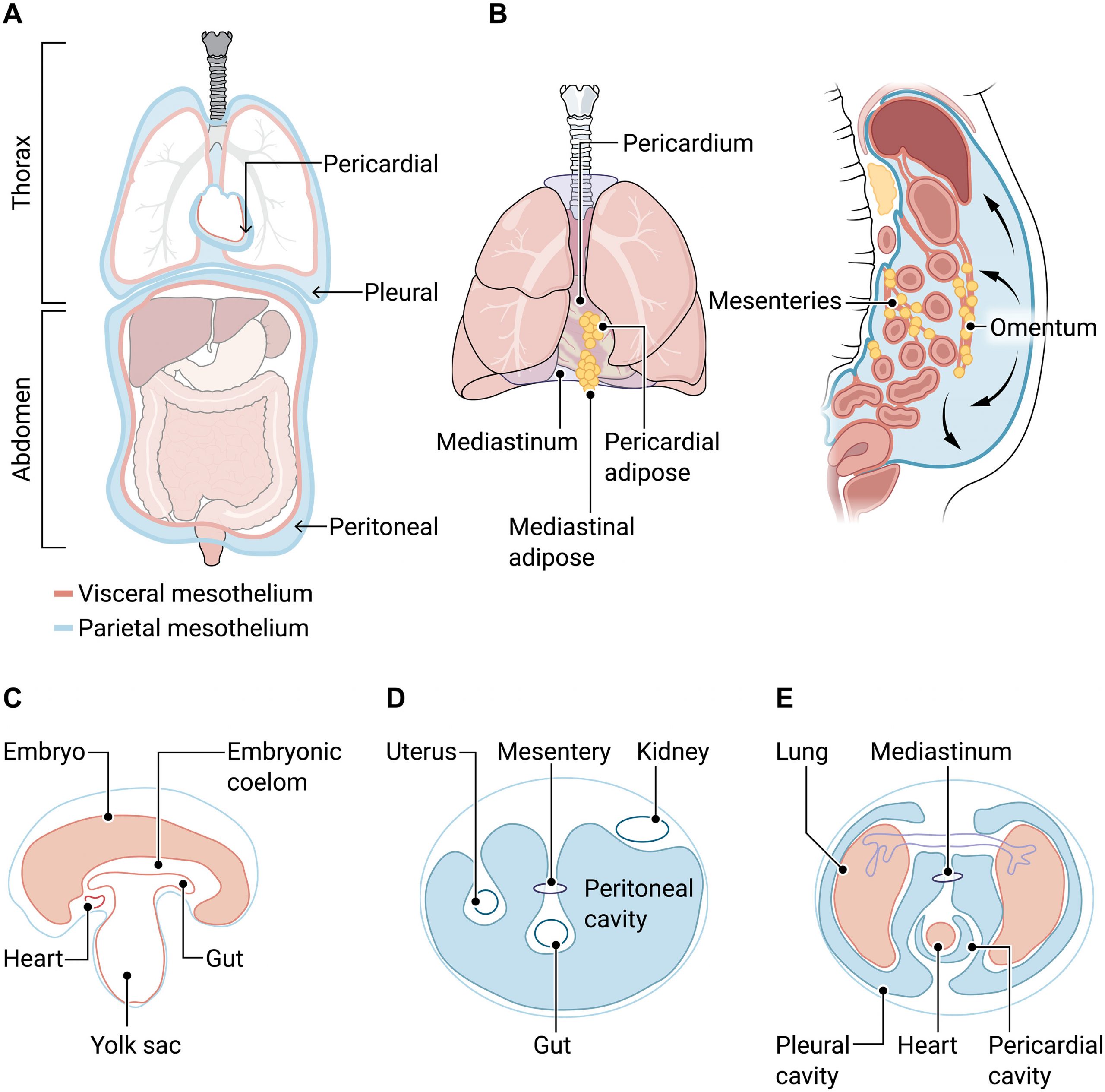
Figure 1: Development dictates the formation of serous cavities and associated immune adipose tissues. (A) The pericardial, pleural, and peritoneal cavities. The parietal mesothelium lines the cavity wall and reflects back over the organs in each cavity, where it becomes known as the visceral mesothelium; each cavity contains a small volume of lubricating serous fluid. (B) Each serous cavity contains FALCs in specialized adipose depots. Serous fluid circulates because of gravity and internal pressure changes in the cavities. (C) Developing embryo showing relationship between embryonic coelom that forms the serous cavities, the yolk sac that is the site of primitive hematopoiesis, the developing gut, and the heart. (D) Cross section through the peritoneal cavity and its association with abdominal organs including the kidney, uterus, and gut; the mesentery is indicated. (E) Cross section through thorax, detailing location of the pericardial cavity associated with the heart and the two pleural cavities enclosing the lungs; in mice, the pericardial and pleural cavities are interconnected by pores; the mediastinum is indicated. CREDIT: A. FISHER/SCIENCE IMMUNOLOGY.
Importantly, immune activity within the serous cavities extends beyond the cavities themselves. Cells originating in these fluid environments can influence immune responses in adjacent organs, shaping both protective and pathological outcomes. This cross-talk between cavity immune cells, mesothelial linings, solid organs, and lymphoid tissues is now recognized as a key component of integrated tissue immunity.
Collectively, the evidence positions serous cavities as strategic immune hubs that defend against pathogens and tissue damage arriving at these sites. Understanding how these compartments communicate with enclosed organs may open new therapeutic opportunities to modulate inflammation and improve disease outcomes.
Journal article: Parkinson, J.E., et al. 2026. Immunobiology of the serous cavities. Science Immunology.
Summary by Stefan Botha