


Psoriasis is a chronic autoimmune skin disorder characterized by recurring inflammation. Recent research suggests that psoriatic skin exhibits increased aerobic glycolysis and lactate accumulation, indicating that protein lactylation may contribute to disease development (Figure 1). However, biomarkers linked to lactylation in psoriasis remain poorly understood.
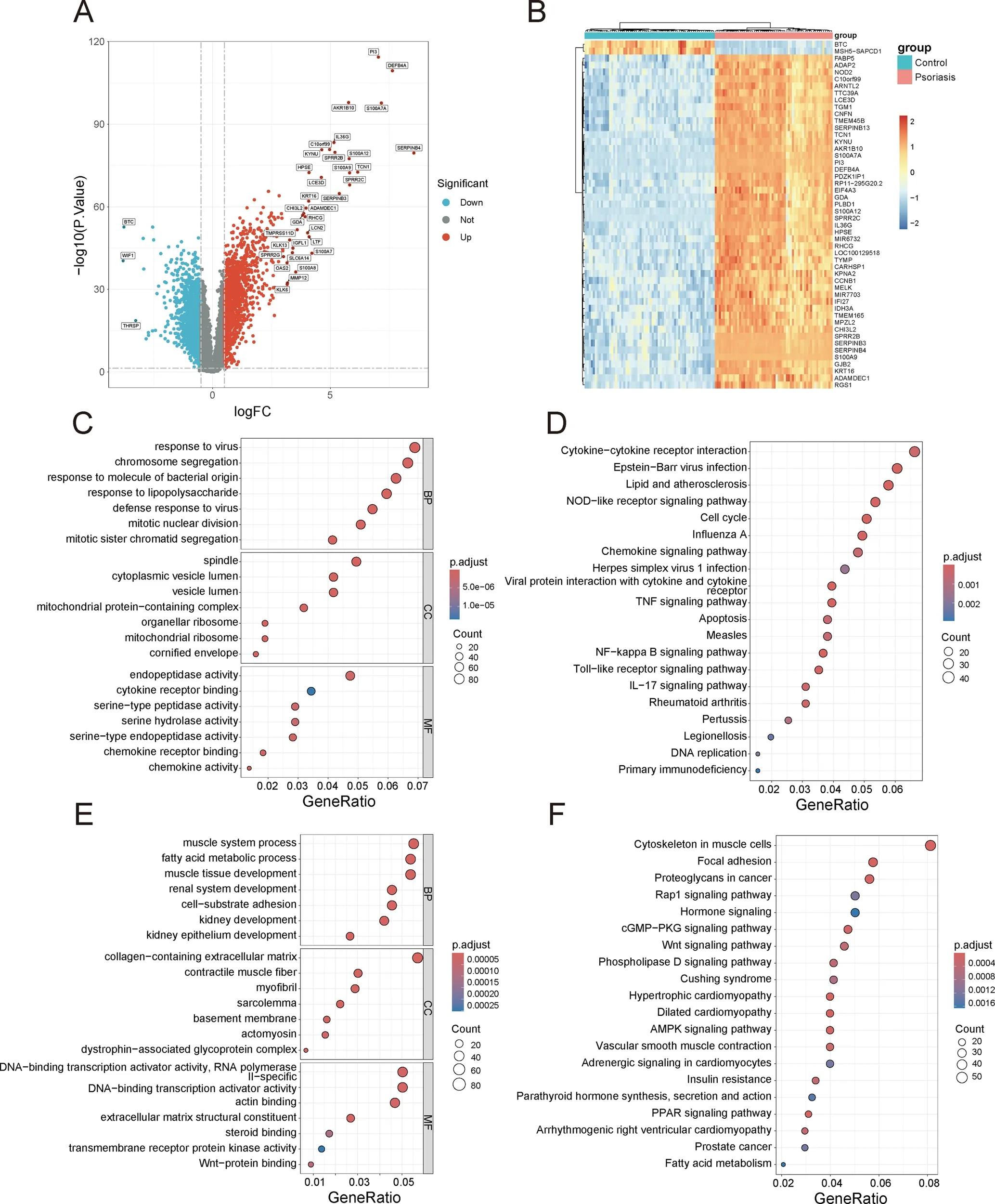
Figure 1: Identification of DEGs in GSE13355 and enrichment analysis of DEGs to elucidate their functions. (A) Volcano plot of DEGs, with genes having a p-value less than 0.005 and |logFC| greater than 3 labeled. (B) Heatmap of the expression patterns of the top 50 most significantly differentially expressed genes. (C) GO analysis of the upregulated genes. (D) KEGG analysis of the upregulated genes. (E) GO analysis of the downregulated genes. (F) KEGG analysis of the downregulated genes.
In this study, researchers identified genes associated with psoriasis using differential expression analysis and weighted gene co-expression network analysis (WGCNA). These genes were intersected with known lactylation-related genes, and machine learning approaches, including Random Forest and LASSO regression, were used to identify potential biomarkers.
Four genes, MPHOSPH6, ENO1, MKI67, and FABP5, emerged as key lactylation-related markers, showing strong diagnostic potential in ROC analyses. Their expression was validated in an imiquimod-induced mouse model of psoriasis using RT-qPCR. Immune cell infiltration analysis also revealed significant associations between these genes and immune cell populations in psoriatic lesions.
Further analysis predicted more than 100 potential drugs targeting these biomarkers, and single-cell sequencing data was used to explore their expression patterns. Mendelian randomization analysis indicated that elevated levels of MPHOSPH6 and ENO1 may increase the risk of psoriasis.
Overall, the findings highlight several lactylation-associated genes that may serve as diagnostic markers or therapeutic targets in psoriasis.
Journal article: Li, S., et al . 2026. Machine learning meets psoriasis: identifying key lactylation biomarkers as potential targets for diagnosis and therapies. Frontiers in Immunology.
Summary by Stefan Botha