


Mutations in TP53 are among the most common changes in cancer. Because they often occur early, they can be truncal mutations, shared by many or all tumour cells, making them attractive targets for T-cell-based immunotherapy.
But new research reveals a major obstacle: many p53 mutations are surprisingly difficult for the immune system to see (Figure 1).Tumour immunopeptidomics showed that common p53 hotspot mutations often occur in regions that are poorly processed and therefore never displayed on HLA molecules for T cells to recognise.
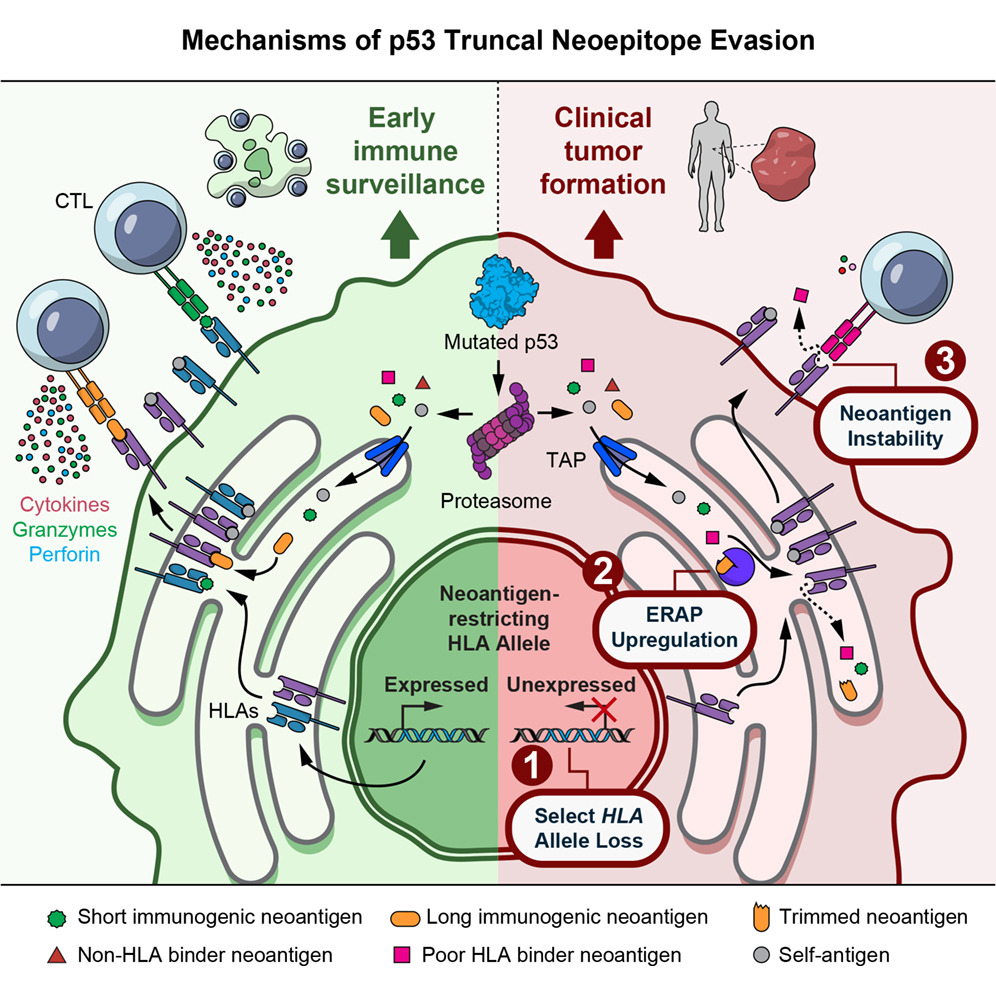
Figure 1: Graphical abstract.
Even when mutant p53 peptides could be presented, tumours could evade recognition by:
• Losing the relevant HLA molecule
• Increasing ERAP1, which alters peptide processing
• Presenting mutant peptides that bind HLA but have poor antigenicityThis helps explain why even mutations shared across an entire tumour may not make effective immunotherapy targets.
The findings also suggest that shifting the tumour immunopeptidome, changing which peptides are processed and displayed, could potentially expose hidden neoantigens and improve T-cell recognition.
Finding a tumour mutation is only the first step. For immunotherapy to work, the immune system must also be able to see it.
Journal article: Haratani, K. et al. 2026. Cancers modulate processing and presentation of p53 neoantigens to evade T cell detection. Immunity.
Summary by Stefan Botha