

Older adults are at significantly greater risk of developing severe COVID-19 and respiratory complications, but the biological mechanisms underlying this age-related vulnerability are not fully understood.
New research has identified a potential link between platelet activation, serotonin and fibrin deposition in the lungs that may contribute to severe disease following SARS-CoV-2 infection (Figure 1).
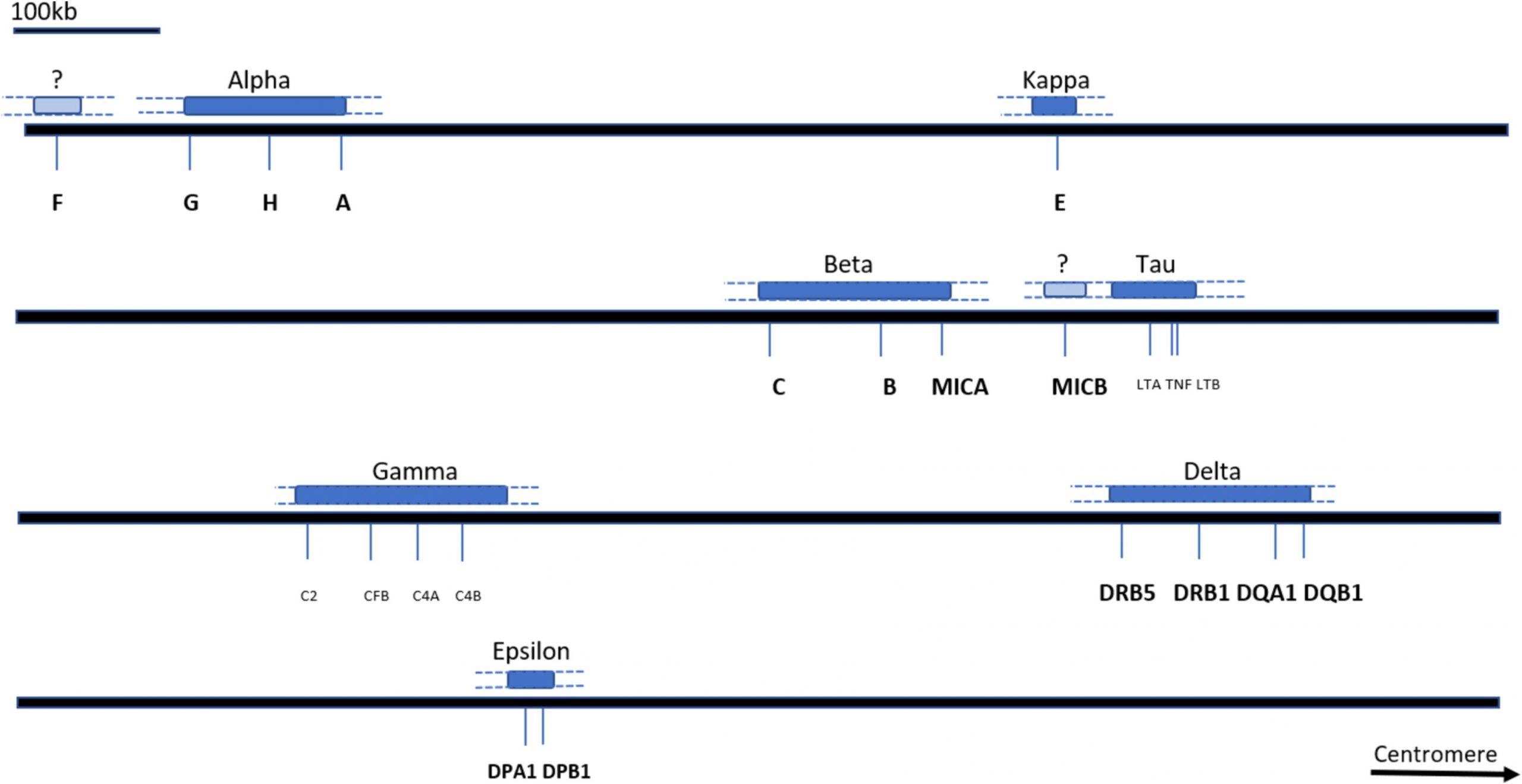
Figure 1: Aging is associated with increased platelet activation and thrombosis during SARS-CoV-2 infection in mice. (A) Schematic representation of the experimental design. (B) Platelet counts on days 0, 3, and 6 p.i. [young: n = 8 (day 0), n = 10 (day 3), and n = 10 (day 6); middle-aged: n = 7 (day 0), n = 8 (day 3), and n = 10 (day 6)]. (C to E) P-selectin expression in isolated platelets stimulated with (C) PAR4-AP, (D) AA, or (E) ADP on day 3 p.i. [young: n = 7 (PAR4-AP), n = 8 (AA), and n = 5 (ADP); middle-aged: n = 9 (PAR4-AP), n = 9 (AA), and n = 5 (ADP)]. (F to H) Representative platelet aggregation curves and AUC quantification after stimulation of PRP with (F) PAR4-AP, (G) AA, or (H) ADP on day 3 p.i. Red and blue lines represent young and middle-aged infected mice, respectively [young: n = 5 (PAR4-AP) and n = 4 (AA, ADP); middle-aged: n = 5 (PAR4-AP), n = 10 (AA), and n = 9 (ADP)]. (I) Representative confocal micrographs of lung sections. Scale bars, 30 μm. (J) Platelet-positive (left) and fibrin-positive (right) lung areas; each dot represents one region of interest (ROI) [PBS: n = 7 (platelets) and n = 5 (fibrin); young: n = 12 (platelets) and n = 14 (fibrin); middle-aged: n = 24 (platelets) and n = 19 (fibrin)]. [(B) to (E), (F) to (H), and (J)] Data are presented as means ± SEM. [(B) to (E), (F) to (H), and (J)] Data were pooled from two independent experiments per time point. (I) Images are representative of two independent experiments. Statistical significance was determined using (B) Kruskal-Wallis H test, [(C) to (E)] two-way ANOVA with multiple comparisons, or [(F) to (H) and (J)] Mann-Whitney U test.
Published in Science Immunology, the study found that platelets from middle-aged mice released higher levels of serotonin when activated. A similar increase in platelet serotonin release was observed in platelets from older healthy human donors.
Serotonin is best known for its role as a neurotransmitter, but it also has important functions outside the nervous system. Platelets store large amounts of serotonin and release it when they become activated.
During SARS-CoV-2 infection, the researchers found that increased platelet serotonin release was associated with platelet aggregation and fibrin deposition within the lung microvasculature. This accumulation can interfere with the pulmonary circulation and contribute to impaired respiratory function.
Using a mouse model of age-associated COVID-19 severity, researchers investigated whether serotonin was actively contributing to disease rather than simply being a consequence of inflammation. Blocking serotonin uptake or disrupting serotonin-dependent signalling reduced platelet activation and protected mice from respiratory distress.
Importantly, these effects occurred without reducing viral replication or altering immune-cell infiltration, suggesting that the protective effect was driven primarily through the coagulation and platelet pathways rather than by directly controlling the virus or the broader immune response. Blocking fibrin formation produced a similar reduction in disease severity, further implicating a serotonin–fibrin pathway in the development of lung pathology.
COVID-19-associated coagulopathy (CAC), characterised by abnormal platelet activation and clot formation, can contribute to damage of the pulmonary microvasculature and respiratory failure.
The study suggests that increased serotonin release from ageing platelets may amplify this process:
Ageing → increased platelet serotonin release → platelet hyperactivation → fibrin deposition → pulmonary microvascular dysfunction → respiratory impairment
Interestingly, the pathway appeared to influence disease severity independently of viral replication, highlighting how host responses can contribute substantially to the clinical consequences of infection.
The findings raise the possibility that targeting serotonin signalling, platelet activation or fibrin formation could help protect vulnerable individuals from severe COVID-19-related respiratory disease. While further studies are needed to determine whether this mechanism translates directly to human COVID-19 and whether targeting serotonin can safely improve outcomes, the work highlights an important aspect of age-related disease: the way our blood and vascular systems respond to infection can change with age, potentially influencing disease severity even when viral replication and immune responses are not the primary drivers.
Journal article: Marotta et al. 2026. Serotonin-mediated platelet procoagulant activity contributes to age-associated respiratory insufficiency during SARS-CoV-2 infection. Science Immunology.
Summary by Stefan Botha