


Drugs that mimic the hormone glucagon-like peptide-1 (GLP-1) have rapidly transformed the treatment landscape for type 2 diabetes and obesity. However, emerging research suggests that their effects may extend far beyond metabolism, revealing a potential role for these therapies in controlling chronic inflammation and immune-driven skin diseases.
A recent review published in Pharmaceutics highlights growing evidence that GLP-1 receptor agonists (GLP-1RAs) may influence inflammatory pathways involved in conditions such as psoriasis, atopic dermatitis, hidradenitis suppurativa, and chronic wounds (Figure 1).
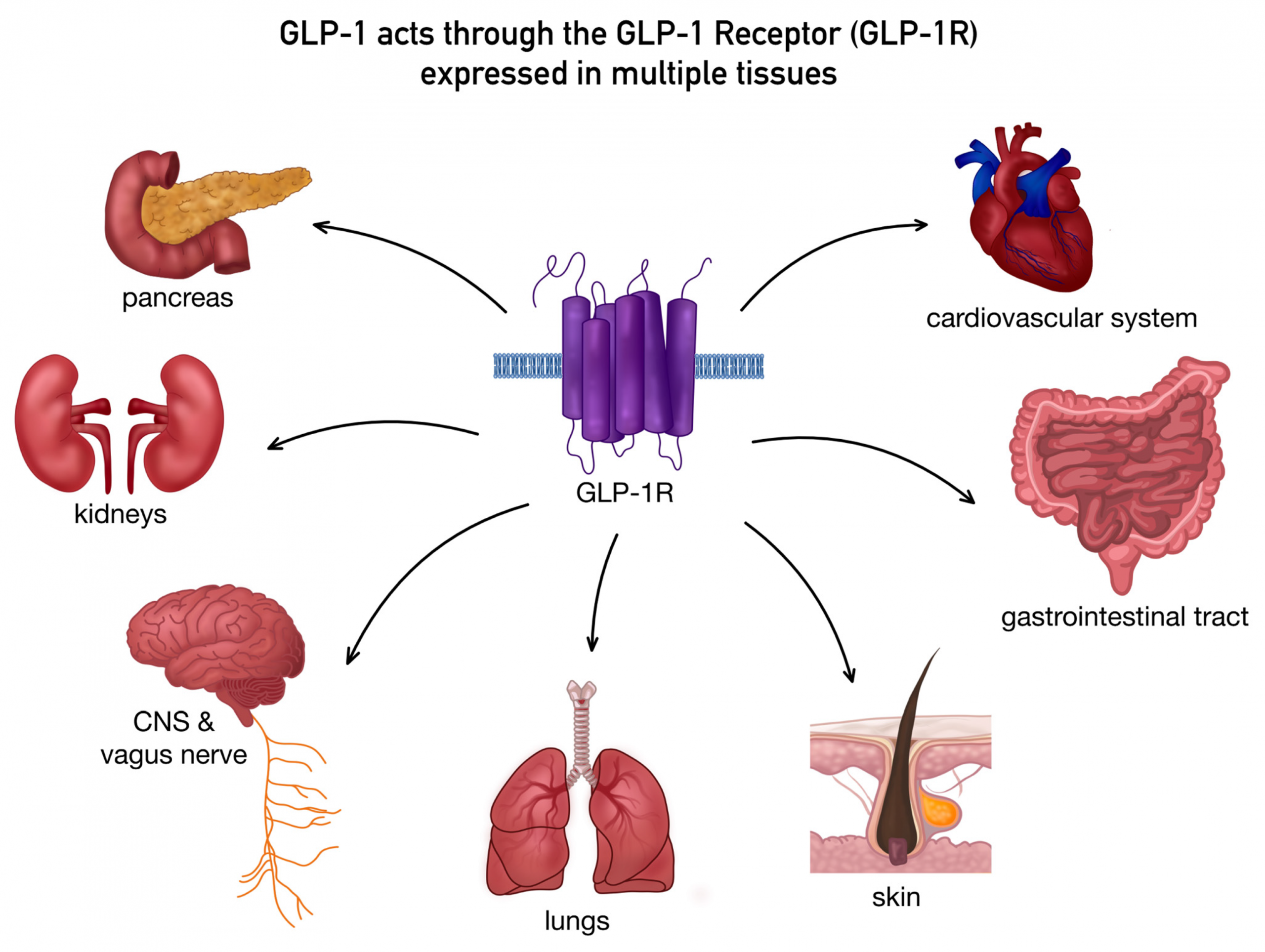
Figure 1: Tissue Distribution of the GLP-1 Receptor (GLP-1R). Abbreviations: GLP-1—Glucagon-like peptide-1; GLP-1R—GLP-1 receptor; CNS—central nervous system.
The idea that GLP-1 drugs may affect skin disease began with clinical observations. Dermatologists noticed that some patients receiving GLP-1-based therapies for diabetes or obesity experienced improvements in inflammatory skin conditions, particularly psoriasis. Initially considered incidental findings, these observations prompted researchers to investigate whether GLP-1RAs were simply improving disease indirectly through weight loss and metabolic health or whether they were directly influencing immune pathways.
A key discovery shifted this field forward: GLP-1 receptors are not restricted to classical metabolic tissues such as the pancreas and gastrointestinal tract. They are also expressed on immune cells, suggesting that these drugs may directly regulate inflammatory responses.
Many chronic inflammatory skin diseases share a common biological foundation: persistent immune activation that drives tissue damage, abnormal repair, and long-term disease progression. Research suggests that GLP-1 receptor activation can influence several immune populations involved in these processes, including macrophages, neutrophils, and T cells.
One of the most promising mechanisms is the ability of GLP-1RAs to reduce inflammatory signalling. Studies indicate that these drugs may suppress production of key inflammatory mediators, including tumour necrosis factor alpha (TNF-α), interleukin-6 (IL-6), and interleukin-17 (IL-17), cytokines that play central roles in diseases such as psoriasis.
Psoriasis has been the most extensively studied condition in this context. Affecting approximately 2–3% of the global population, psoriasis is increasingly recognised not only as a skin disorder but as a systemic inflammatory disease associated with obesity, insulin resistance, cardiovascular disease, and type 2 diabetes.
This overlap between metabolic dysfunction and inflammation makes GLP-1RAs particularly attractive as potential therapies for patients experiencing both psoriasis and metabolic comorbidities.
Clinical studies involving drugs such as liraglutide and semaglutide have reported improvements in psoriasis severity following treatment. However, researchers caution that the mechanisms remain unclear. Improvements may result from direct immune modulation, weight reduction, improved insulin sensitivity, or a combination of these effects.
Interest is also growing in atopic dermatitis, a disease characterised by impaired skin barrier function and abnormal immune activation. While clinical evidence remains limited, experimental studies suggest GLP-1 signalling may influence inflammatory pathways involved in disease maintenance and may support tissue repair mechanisms.
Beyond immune regulation, GLP-1 receptor agonists may also enhance regenerative processes within damaged skin. Studies have linked these drugs with improved endothelial function, increased tissue perfusion, and accelerated wound healing, effects that could be particularly valuable for patients with diabetes, who are at increased risk of chronic wounds and impaired healing.
This broader perspective reflects a changing understanding of inflammatory skin diseases. Conditions such as psoriasis and atopic dermatitis are no longer viewed as isolated skin problems but as diseases connected to systemic immune and metabolic dysfunction.
By targeting both metabolic pathways and inflammation, GLP-1RAs represent an emerging example of immunometabolic therapy, where treatments originally developed for one biological system may influence disease processes across multiple organs.
Despite the excitement, researchers emphasise that GLP-1 receptor agonists are not yet replacements for established dermatological treatments. Modern biologic therapies targeting specific inflammatory pathways remain the standard of care for many severe skin diseases.
At present, GLP-1RAs are most likely to have a role as complementary therapies, particularly for patients with inflammatory skin disease alongside obesity, insulin resistance, or diabetes. Larger clinical trials will be required to determine their effectiveness, optimal patient populations, and how they might be incorporated into future treatment strategies.
If these findings are confirmed, GLP-1 receptor agonists may become one of the first major therapeutic classes to bridge metabolism, immunology, and dermatology, offering a new approach to treating chronic inflammatory diseases through restoration of immune and metabolic balance.
Journal article: Andrzejczak, K., et al. 2026. GLP-1 Receptor Agonists in Chronic Inflammatory Skin Diseases: Immunometabolic Mechanisms and Translational Perspectives. Pharmaceutics.
Summary by Stefan Botha