


A new study has uncovered a previously unrecognised connection between two major infectious diseases: influenza and tuberculosis (TB) (Figure 1). The research shows that influenza infection can temporarily weaken the immune system’s ability to control Mycobacterium tuberculosis, the bacterium responsible for TB, potentially increasing susceptibility to disease.
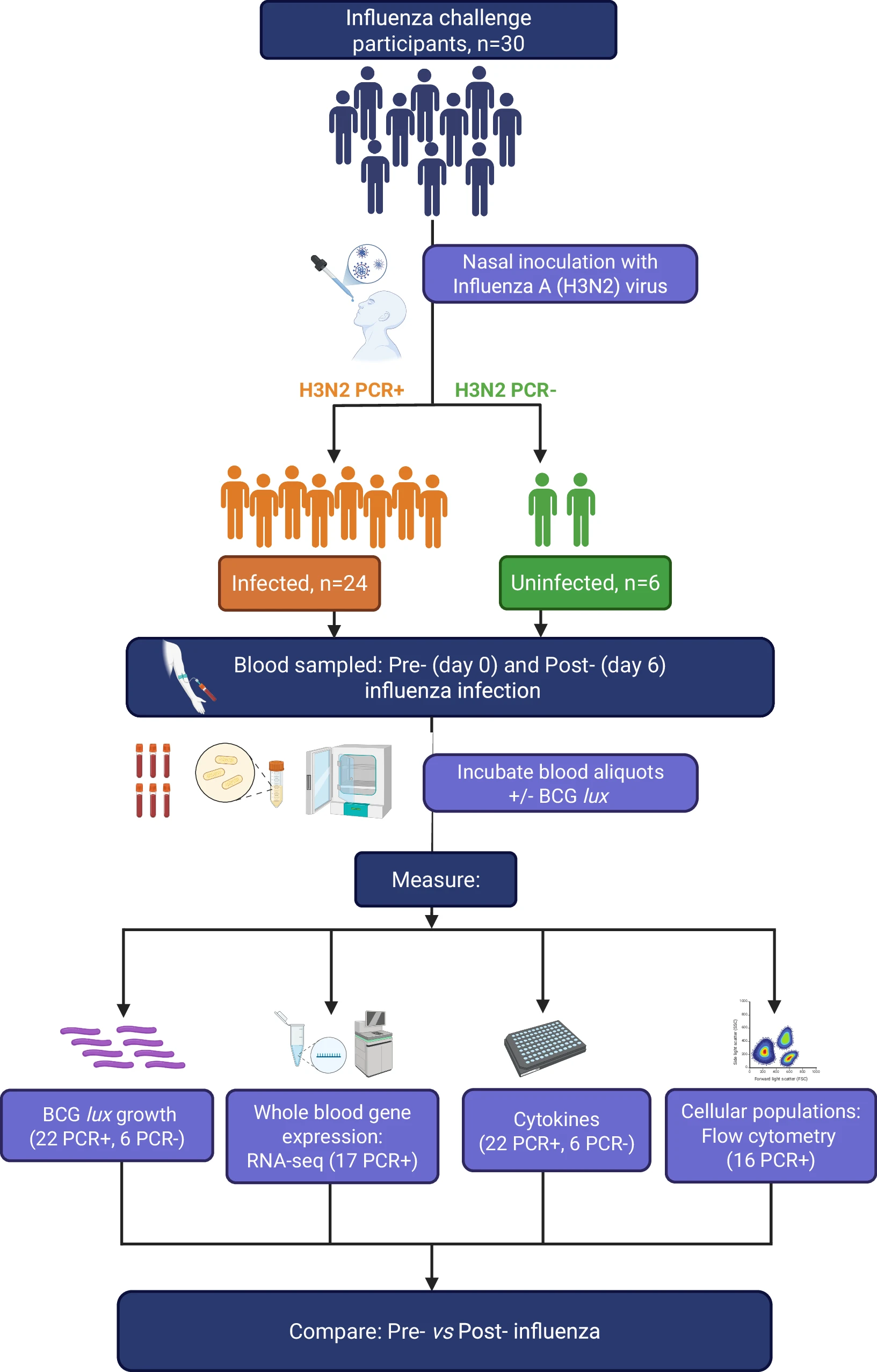
Figure 1: Study design and sampling.
The findings suggest that seasonal influenza vaccination could represent a new tool for reducing TB risk, particularly in regions where TB remains widespread and populations face a high burden of infection, including countries such as India, Indonesia, and South Africa.
TB remains one of the world’s leading causes of death from infectious disease, with approximately 11 million people developing active disease each year. While antibiotic treatment remains the cornerstone of TB control, rising antimicrobial resistance and the emergence of multidrug-resistant TB strains highlight the urgent need for additional prevention strategies.
The researchers investigated how influenza infection affects the immune pathways required to contain TB. Human challenge studies allow scientists to carefully monitor immune responses by studying volunteers before and after controlled exposure to infection, providing insights that are difficult to capture in naturally occurring disease.
The team analysed blood samples collected from healthy volunteers before and after influenza infection. These samples were then exposed to Mycobacterium tuberculosis in laboratory experiments to determine how effectively immune cells could restrict bacterial growth.
The researchers found that individuals who developed influenza infection showed a significantly reduced ability to control mycobacterial growth compared with their own pre-infection samples and with individuals who did not become infected with influenza.
Further investigation revealed that this impaired control was linked to disruption of type I interferon signalling, an important immune pathway involved in coordinating antimicrobial defence. While type I interferons are best known for their role in antiviral immunity, previous research has shown that balanced interferon responses are also critical for controlling TB infection.
The study provides the first direct evidence in humans that influenza can alter immune function in a way that compromises protection against TB. The findings demonstrate that infections do not occur in isolation. A respiratory virus such as influenza can reshape immune responses beyond the immediate infection, potentially creating a temporary window where other pathogens can gain an advantage.
This discovery raises the possibility that influenza vaccination could provide benefits beyond preventing seasonal flu. By reducing influenza infections, vaccination may help preserve immune pathways needed to maintain control of M. tuberculosis.
Such an approach could be particularly valuable in regions with high TB transmission, where additional low-cost interventions are urgently needed. Strengthening existing prevention strategies through widely available influenza vaccination could offer a complementary method to reduce TB burden, especially as antibiotic resistance continues to challenge current treatment approaches.
Journal article: Broderick, C.M., et al. 2026. Influenza coinfection inhibits control of mycobacterial infection in a human challenge model. Nature Communications.
Summary by Stefan Botha