


Successful embryo implantation depends on a receptive endometrium, yet the immune landscape of the uterus during this critical window is still poorly understood. A recent study examined whether specific immune cell populations in the endometrium are associated with pregnancy outcomes following frozen embryo transfer (FET) (Figure 1).
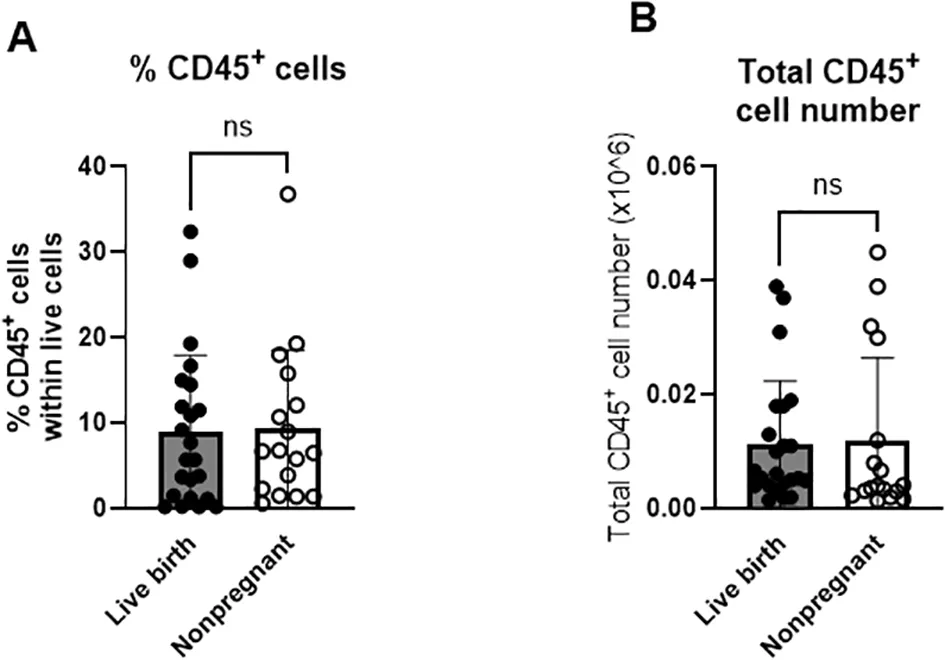
Figure 1: Immune cells in uterine fluid are equally distributed between the live birth group and non-pregnant group. Uterine fluid samples were collected on the day of embryo transfer, and pelleted cells stained with live/dead kit and anti-CD45, and analyzed on FlowJo software. (n=40 +/- SD unpaired t-test (two-tailed), *p<0.05). (A) percent (%) of CD45+ cells within all live cells (B) total number of CD45+ cells within all live cells.
In this prospective study, researchers analysed immune cells collected from the embryo transfer catheter after single-embryo transfer in 48 patients undergoing hormone replacement FET cycles. Immune profiling focused on multiple cell types, including T cell subsets, neutrophils, and other leukocytes.
Half of the participants achieved a live birth, while the remainder experienced miscarriage, biochemical pregnancy, or failed implantation. The analysis revealed that patients who achieved a live birth had significantly higher levels of γδ T cells in the uterine environment. In contrast, higher proportions of neutrophils were observed in patients whose embryos failed to implant.
Predictive modelling suggested that both γδ T cell and neutrophil levels could moderately distinguish between successful and unsuccessful implantation outcomes.
Overall, the findings suggest that the immune composition of the endometrium during embryo transfer may influence implantation success. Although the clinical implications remain to be determined, profiling uterine immune cells could eventually help identify biological factors that support or hinder pregnancy during IVF treatment.
Journal article: Rodriquez, S., et al. 2026. Endometrial immune cell profile at the time of frozen embryo transfer as prognostic indicator of live birth. Frontiers Immunology.
Summary by Stefan Botha