

A new review highlights how immune cells, particularly T cells, influence both maternal and infant health during breastfeeding (Figure 1). The research reframes lactation not simply as a nutritional process but as a highly regulated immune state with lasting biological effects.
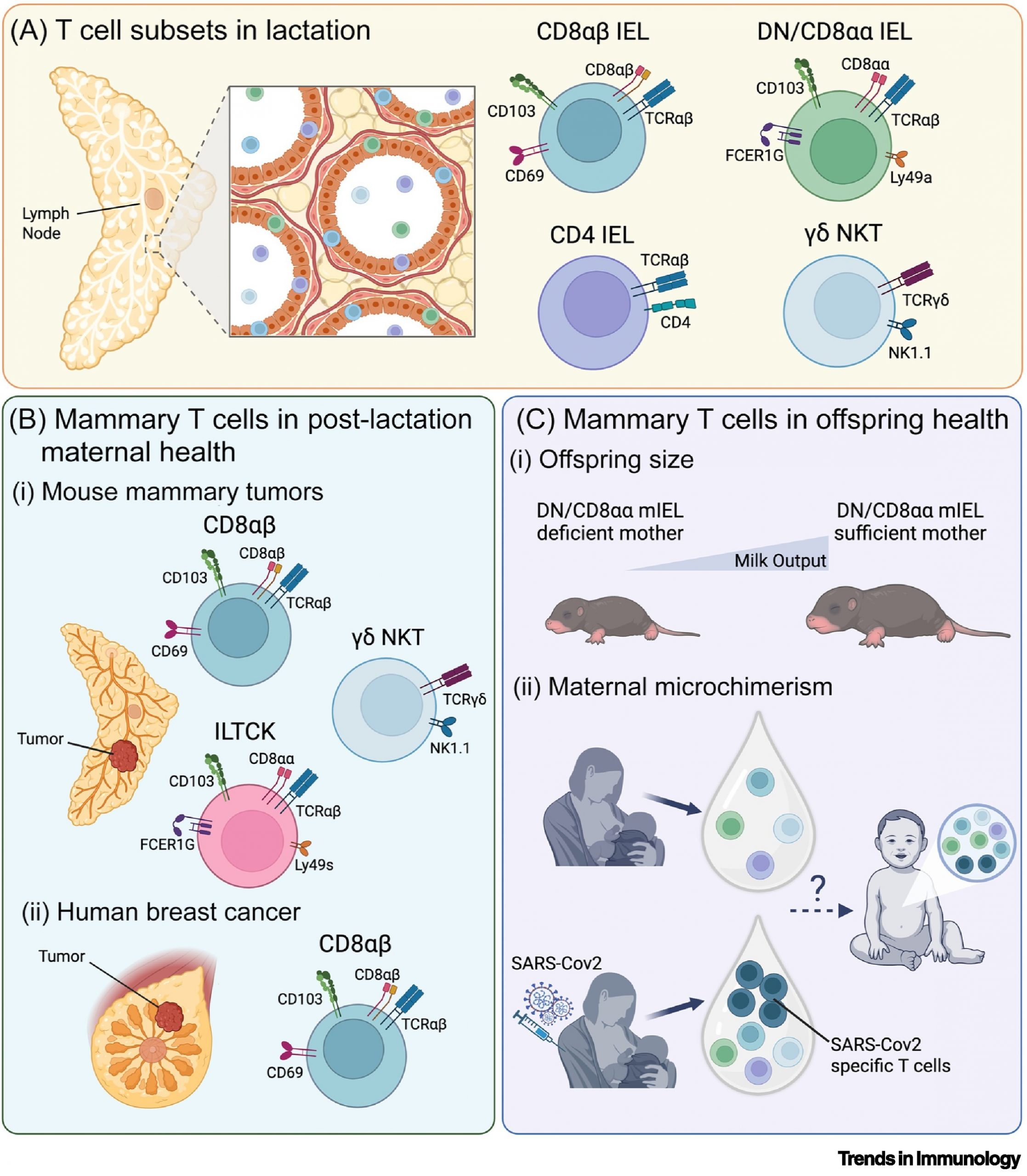
Figure 1: Graphical abstract.
Recent studies in animal models and human milk have shown that several T cell populations expand in the mammary gland during lactation. These cells help regulate mammary gland development and support milk production. They may also contribute to long-term maternal benefits, including the reduced risk of breast cancer observed in women who breastfeed.
Breast milk also contains immune cells that may benefit the infant. T cells transferred through milk are thought to help shape the developing immune system, promote healthy gut microbiota, and provide protection against infections early in life.
Despite these advances, many questions remain. Researchers are still working to understand how different T cell subsets function during lactation, how immune signals interact with mammary tissue, and how maternal immune cells transferred through milk influence neonatal immune development.
Together, the findings emphasize that lactation is an immunologically active process that plays an important role in shaping health outcomes for both mother and child. A deeper understanding of these mechanisms may also help address challenges such as poor milk production and breastfeeding-associated infections.
Journal article: Jacquish. A and Ramanan D. 2026. Got milk? how T cells shape lactation and beyond. Trends in Immunology.
Summary by Stefan Botha