


A new pilot study suggests that prolonged exposure to airborne pollen, particularly ragweed, may worsen symptoms and quality of life in people with chronic rhinosinusitis (CRS). The research found that patients exposed to higher pollen levels over several years reported more severe disease-related impairment (Table 1).
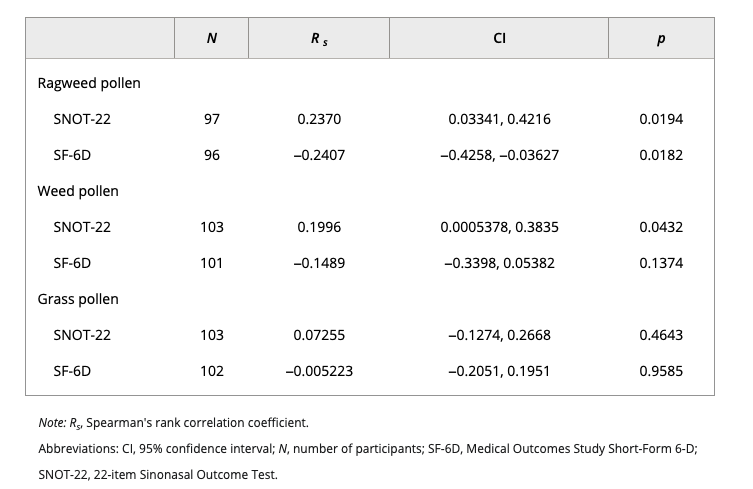
Table 1: Bivariate associations between 5-year pollen exposure and disease severity.
The study followed 103 CRS patients and linked five-year pollen exposure data to patient-reported outcomes using the Sino-Nasal Outcome Test (SNOT-22), a standard measure of CRS symptom burden. Higher long-term exposure to ragweed and other weed pollens was associated with worse quality-of-life scores, indicating more severe and persistent symptoms.
While allergies are frequently discussed in relation to CRS, their impact on long-term disease outcomes has remained unclear. This study helps address that gap by showing that environmental pollen exposure, rather than allergy diagnosis alone, may influence how severely patients experience CRS.
The findings build on earlier research showing that pollen increases allergic rhinitis symptoms, but extend those observations to CRS, a condition marked by longer-lasting inflammation and symptoms such as facial pain, congestion, and loss of smell.
The authors note that the study is exploratory and has limitations, including its retrospective design, reliance on self-reported allergy status, and limited geographic coverage of pollen monitoring stations. Larger, prospective studies using objective allergy testing and personal exposure tracking will be needed to confirm these results.
Overall, the study highlights environmental pollen as a potential contributor to chronic sinonasal disease severity and suggests that long-term exposure may play a role in shaping patient quality of life.
Journal article: Benton Tullis et al, 2025. Pollen Exposure and Chronic Rhinosinusitis Quality of Life Disease Severity. Laryngoscope Investigative Otolaryngology.
Summary by Stefan Botha