


New research shows that beneficial bacteria train the maternal immune system to tolerate the developing fetus (Figure 1).
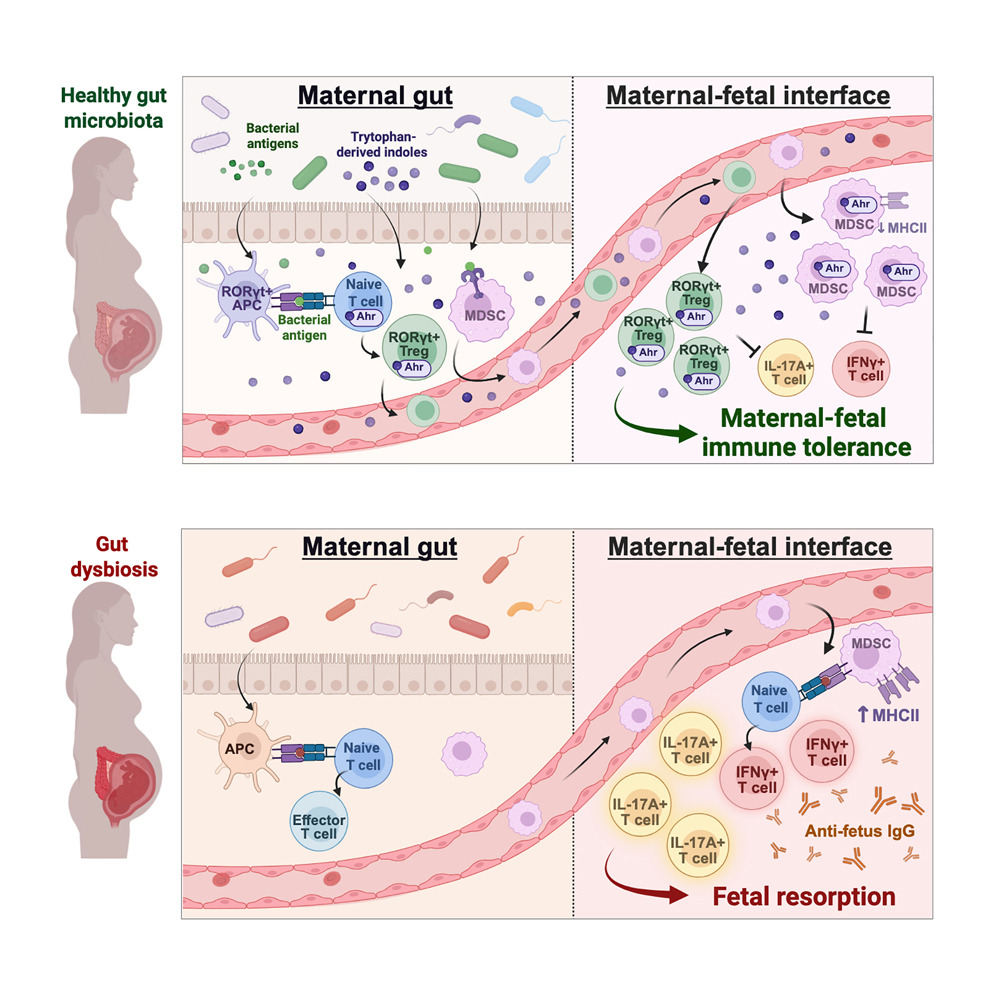
Figure 1: Graphical abstract.
Pregnancy poses a remarkable immunological challenge: the mother’s immune system must remain vigilant against infection while simultaneously tolerating a genetically distinct fetus. When this delicate balance fails, it can lead to recurrent miscarriage or stillbirth outcomes that remain unexplained in more than half of affected women.
A new preclinical study reveals that gut microbes play a central role in teaching the maternal immune system how to protect pregnancy. The findings identify specific microbial metabolites that promote immune tolerance at the placenta and dramatically improve pregnancy outcomes in mice.
The researchers focused on how the maternal immune system adapts during pregnancy to avoid attacking fetal tissues. They discovered that beneficial gut bacteria produce tryptophan-derived metabolites that travel to the maternal–fetal interface and help recruit two key immune cell populations:
- Myeloid-derived suppressor cells (MDSCs)
- RORγt⁺ regulatory T cells (pTregs)
Together, these cells suppress excessive inflammation and establish immune tolerance within the placenta.
To test the role of the microbiome, the team studied two mouse models:
- Germ-free mice, raised without exposure to microbes
- Antibiotic-treated mice, with disrupted gut microbiota
Both groups showed severe placental inflammation, excessive interferon-gamma–producing T cells, and immune antibodies that targeted fetal tissues, resulting in high rates of fetal loss. In contrast, mice with intact gut microbiomes generated protective MDSCs and pTregs and maintained healthy pregnancies.
The researchers identified tryptophan metabolites in the amniotic fluid of healthy pregnant mice, compounds produced by specific gut bacteria. When germ-free mice were given either:
- These metabolites directly, or
- The bacteria capable of producing them
Fetal survival rates increased from ~50% to 95%. Importantly, unrelated gut bacteria did not rescue pregnancy outcomes, underscoring the specificity of this immune–microbiome pathway.
To explore relevance in humans, the team analysed decidual tissue from women who had experienced recurrent miscarriages. These samples showed:
- Reduced levels of tryptophan-derived metabolites
- Fewer MDSCs and pTregs
The findings open new possibilities for treating unexplained pregnancy loss. The researchers now plan to:
- Further define microbiome–immune interactions during pregnancy
- Explore dietary, probiotic, or metabolite-based interventions
- Collaborate with clinicians to translate these discoveries into patient care
Gut microbes help educate the maternal immune system during pregnancy by producing metabolites that recruit tolerance-promoting immune cells to the placenta. This newly identified pathway may explain unexplained pregnancy loss and pave the way for microbiome-based therapies to support healthy pregnancies.
Journal article: Brown, J. A., et al. 2025. Gut microbiota promotes immune tolerance at the maternal-fetal interface. Cell.
Summary by Stefan Botha