


New research links poor sleep and anxiety to reduced natural killer cells in young adults (Figure 1).
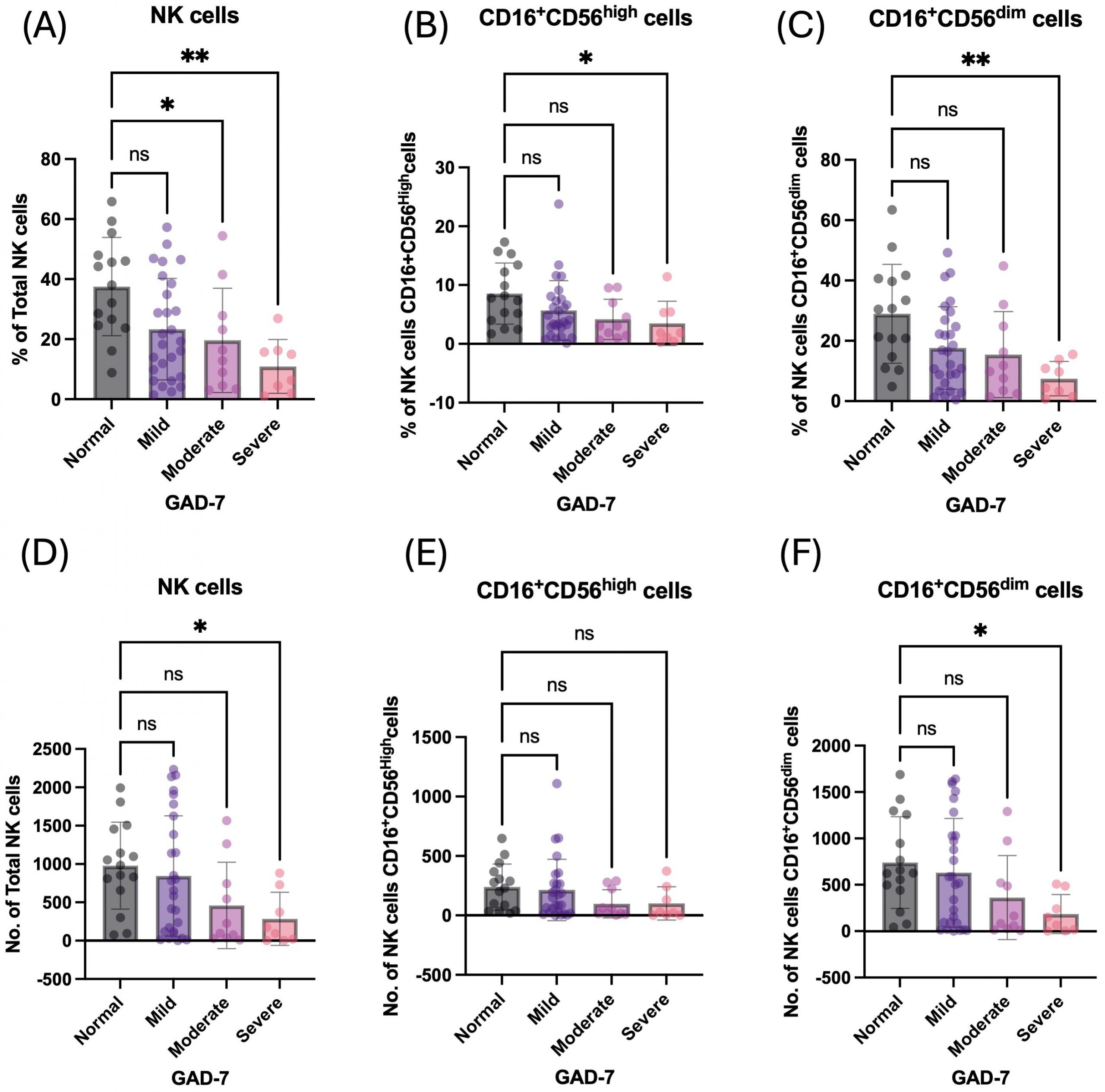
Figure 1: Anxiety has a negative influence on the percentage of peripheral NK cells and their subpopulation. (A) Percentage of total NK cells based on GAD-7 categories; mild, moderate, and severe compared to normal. (B) Percentage of CD16+CD56dim NK cells based on GAD-7 categories; mild, moderate, and severe compared to normal. (C) Percentage of CD16+CD56high NK cells based on GAD-7 categories; mild, moderate, and severe compared to normal. (D) Absolute cell number of total NK cells based on GAD-7 categories; mild, moderate, and severe compared to normal. (E) Absolute cell number of CD16+CD56dim NK cells based on GAD-7 categories; mild, moderate, and severe compared to normal. (F) Absolute cell number of CD16+CD56high NK cells based on GAD-7 categories; mild, moderate, and severe compared to normal. ns, non-significant, *<0.05, **<0.01.
Natural killer (NK) cells are among the immune system’s most important frontline defenders. They patrol the bloodstream, rapidly destroying virus-infected cells, abnormal cells, and early cancers. When NK cell numbers drop, immune protection weakens — increasing vulnerability to disease.
A new study suggests that anxiety and insomnia may significantly reduce NK cell levels, particularly in young women. With sleep disorders and anxiety on the rise globally, the findings highlight a previously underappreciated link between mental health and immune resilience.
Researchers examined 60 female students aged 17–23, assessing anxiety and insomnia symptoms using validated questionnaires and analysing blood samples to measure NK cell levels and subtypes.
The results revealed a striking pattern:
- 53% of participants reported symptoms consistent with insomnia
- 75% reported anxiety symptoms, with a notable proportion experiencing moderate to severe anxiety
Students with anxiety symptoms had significantly lower numbers and proportions of circulating NK cells, including both major NK cell subtypes. The reduction was most pronounced in those with moderate to severe anxiety, while students with mild symptoms showed little to no significant change.
Similarly, students with insomnia showed a decline in total NK cells, and higher anxiety scores were associated with even lower NK cell proportions.
NK cells exist in different functional subtypes. The dominant CD16⁺CD56ᵈⁱᵐ population is highly cytotoxic, directly killing infected or malignant cells, while the less abundant CD16⁺CD56ʰⁱᵍʰ subset plays a regulatory role, shaping immune responses through signalling molecules.
A reduction in these cells can impair immune surveillance and has been linked to chronic inflammation, cancer susceptibility, and mental health disorders, including depression.
The researchers caution that the study focused only on young women, a group disproportionately affected by anxiety and sleep disorders. Broader studies across different ages, sexes, and populations will be needed to confirm and extend these findings.
Still, the results align with previous research suggesting that lifestyle factors, including regular physical activity, stress reduction, and balanced nutrition, can support NK cell function. Anxiety and insomnia may disrupt these protective effects, quietly undermining immune health over time.
Mental health and immune health are deeply interconnected. This study adds to growing evidence that chronic psychological stress doesn’t just affect mood and sleep, it may also weaken the body’s ability to defend itself.
Anxiety and insomnia are associated with reduced numbers of natural killer cells in young women, potentially compromising immune protection. Addressing mental health and sleep quality may be an important, and often overlooked, component of maintaining long-term immune health.
Journal article: Alhamawi, R.M., et al. 2025. Insomnia and Anxiety: Exploring Their Hidden Effect on Natural Killer Cells Among Young Female Adults, Frontiers in Immunology.
Summary by Stefan Botha